


Joint
Osteoarthritis
A disease of the whole joint: knee, hip, hands, spine.
Consultations are generally offered in French: please confirm with the clinic (579 305-0344). The French version of this site prevails. Translation under professional review.
Musculoskeletal · Saint‑HyacinthePain and mobility
Understand your pain. Preserve your mobility.
Is pain in your shoulder, knee or another joint limiting your activities? Are you concerned about persistent stiffness or muscle discomfort?
At the Clinique IPS du Palais, a musculoskeletal assessment makes it possible to review your symptoms, their possible origin and their impact on your daily life.
Depending on your situation, the plan may include tailored advice, rehabilitation, medication, an injection or a referral to a specialist.
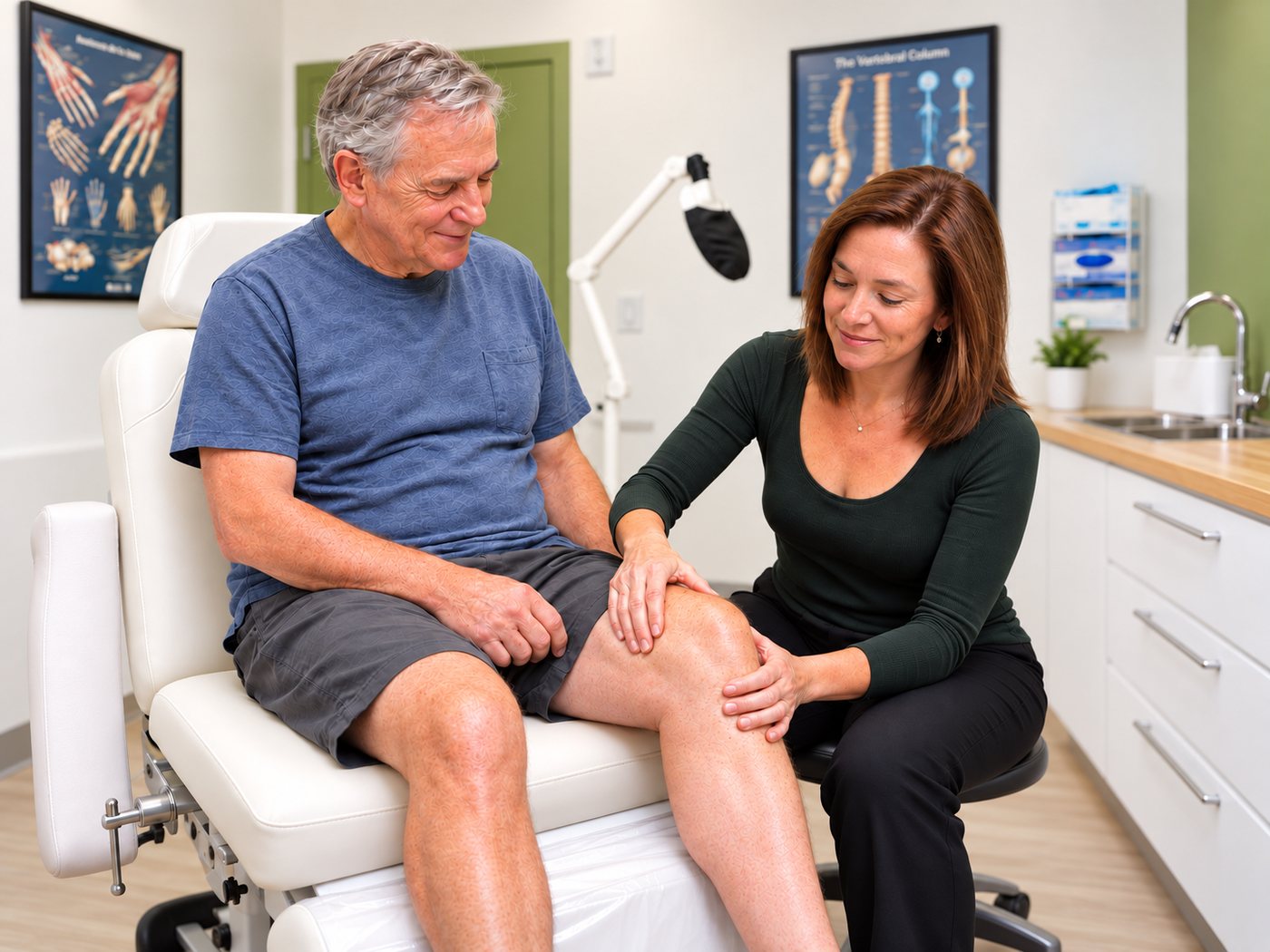
Our goal: to help you understand your situation and choose the next steps together with you.
When to seek care?
A consultation may be appropriate when you have:
You don't need to know the cause of your pain before seeing someone.
The purpose of the assessment is precisely to clarify the problem and determine the appropriate care.
Understanding your pain
Three common problems that are often confused. Our health education pages explain how they differ, how they are assessed and the treatment options.
Joint
A disease of the whole joint: knee, hip, hands, spine.
Tendon
A painful condition affecting a tendon: shoulder, elbow, wrist, hip, knee, Achilles tendon.
Bursa
Irritation or inflammation of a bursa: shoulder, hip, elbow, knee.
Assessment
Walking, climbing stairs, working, being physically active or simply sleeping: we want to understand what your pain is preventing you from doing.
The physical examination helps guide the diagnosis and determine the next steps.
An X-ray, an ultrasound, other imaging or lab tests may be suggested depending on the clinical findings.
These tests are not routine. Whether they are appropriate depends on the question they need to answer and how useful they are for your care.
The options
Treatment depends on the problem identified, the intensity of the symptoms and their effects on your functioning. Options may include:
Advice on temporarily adapting certain activities.
Exercises and a referral to physiotherapy.
Medication, when appropriate.
An injection does not automatically replace rehabilitation. In osteoarthritis, appropriate therapeutic exercise remains a central part of care.3
Cortisone injections
An injection involves administering a medication at a targeted site. Corticosteroids, often called “cortisone,” can reduce inflammation and relieve certain joint or periarticular pain.1
The choice depends on the diagnosis, the site to be treated and your medical situation.
Before the procedure, the expected benefits, risks and alternatives are discussed with you. Temporary pain after the injection may occur; infection is a rare complication. In some people with diabetes, blood sugar may rise temporarily.1
The consultation makes it possible to determine whether an injection is appropriate. It does not guarantee that an injection will be performed.
Viscosupplementation
Viscosupplementation involves injecting a hyaluronic acid-based product into a joint. It is mainly discussed in the context of knee osteoarthritis.
The benefits are uncertain and variable. Some people report relief, but studies do not consistently show a clinically important benefit. Several guidelines therefore do not recommend its routine use.2, 3
If this option is being considered, we discuss with you:
Viscosupplementation does not rebuild cartilage and no result can be guaranteed.
Understanding viscosupplementation →
Referral
Some situations require additional expertise: uncertain diagnosis, persistent symptoms, significant limitation, suspected inflammatory disease or the possibility of specialized treatment.
Depending on the results of the assessment, the NP can refer you to the appropriate resource.4
| Possible referral | Purpose of the consultation |
|---|---|
| Orthopedics | Assess a joint or structural problem that may require a surgical opinion. |
| Rheumatology | Investigate suspected inflammatory arthritis or another rheumatic disease. |
| Physiatry | Further explore functional assessment and treatment and rehabilitation options. |
| Sports medicine | Assess a problem related to physical activity and support the return to activities. |
| Interventional radiology | Assess the possibility of an image-guided procedure when indicated. |
A referral to physiotherapy or another rehabilitation professional may also be part of the plan.
The consultation request specifies the reason and the relevant information. The choice of resource depends on your situation and the services available.
Wait times depend on factors such as clinical priority and the availability of the receiving service. A referral does not guarantee an immediate appointment.
Your journey at the clinic
We review your pain, your limitations and the care you have already received.
The NP presents the findings of the assessment, the relevant tests and the possible options.
Together, you discuss the treatment, its expected benefits, its limits and your preferences.
Follow-up makes it possible to review your progress and adjust the plan. A specialist consultation can be requested when indicated, at the initial assessment or later.
Before your appointment
If you want to discuss an injection, be sure to mention diabetes, anticoagulant use, a recent infection or planned surgery, among other things.
Do not stop any medication on your own before the appointment.
Bring, if you have them:
Frequently asked questions
No. Describe your symptoms and how they have changed. The assessment is used to clarify the diagnosis and the appropriate options.
Not necessarily. Bring any tests you have already had. The NP will determine whether new imaging is useful.
No. It may be appropriate for certain indications. Exercise, rehabilitation, adapting activities or other treatments may be preferred.
It depends on the assessment, the planned procedure and how care is organized. Specify your request when booking so the team can explain how it works.
Cortisone is an anti-inflammatory medication. Viscosupplementation uses a hyaluronic acid-based product, mainly in the context of knee osteoarthritis.
Their indications and the evidence of their effectiveness differ. They are not interchangeable.
This cannot be guaranteed. An injection can sometimes help control symptoms, but it does not replace a surgical assessment when one is indicated.
Yes, when a specialist consultation is indicated. The referral depends on the clinical findings and the needs identified.4
Tell the NP about your follow-up. With your consent, the relevant information can be shared to coordinate recommendations.
The team will tell you the consultation fees and, where applicable, those for the procedure and the injected product. The costs of external services must be confirmed with the provider concerned.
A joint that suddenly becomes very painful, red and warm, especially with fever, a deformity after an injury or new significant weakness requires prompt assessment.
Back pain accompanied by a new loss of bladder or bowel control, or numbness in the genital area, requires assessment in the emergency department.
Is your pain limiting your activities, or are you no longer sure what steps to take?
At the Clinique IPS du Palais, in Saint-Hyacinthe, we suggest starting with an assessment to understand your situation and determine the next steps.
The information on this page is provided for information purposes only and does not replace a consultation with a health professional.