


Understanding your situation
The first session is a chance to take the time to understand what brings you to consult.
You will be able to explain your situation, your concerns, what you have already tried and the changes you would like to see.
Consultations are generally offered in French: please confirm with the clinic (579 305-0344). The French version of this site prevails. Translation under professional review.
Social work · Saint‑HyacintheIndividuals, couples and families
Professional support to help you find solutions suited to your reality
Some situations can become difficult to manage on your own: family tensions, separation, relationship difficulties, exhaustion, major changes, parenting challenges, neurodiversity or concerns about a loved one.
Meeting with a social worker helps you step back, better understand what is at play in your situation and, above all, identify concrete ways to move forward.
At the Clinique IPS du Palais in Saint-Hyacinthe, Élise supports you with a human, confidential and solution-oriented approach, taking into account your personal, family, work and social reality.
The role
A social worker looks at the person as a whole and at how their personal, family, relational, work and social situation influences their daily life.
She seeks to understand not only the difficulty encountered, but also the interactions between the person and their environment.
The goal is not to impose a solution on you, but to help you find the ones that fit your reality.
Her role may include:
Our approach
Élise’s approach is, among other things, systemic and solution-focused.
The systemic approach holds that a difficulty cannot always be understood in isolation.
A person lives within different systems:
The interactions between these different elements can influence what the person is experiencing.
The intervention therefore makes it possible to look at the situation as a whole rather than focusing solely on one symptom or one specific difficulty.
The solution-focused approach also seeks to identify:
Rather than remaining focused solely on the problem, the work aims to determine what can be put in place now to move forward.
This approach makes it possible to build realistic, gradual goals adapted to each person.
Why consult
There is no need to wait until a situation becomes unbearable before asking for help.
A consultation may be appropriate when a difficulty begins to affect your well-being, your relationships, your family, your work or your daily functioning.
You may consult, for example, when you are going through:
a period of stress or overload;
adjustment difficulties;
a separation or a breakup;
grief or a significant loss;
a major change in your life;
relationship difficulties;
recurring conflicts;
a period of questioning;
difficulty setting or maintaining certain boundaries;
a feeling of isolation;
a personal situation that has become difficult to manage;
an imbalance between personal, family and professional life.
Sometimes, the need is simply to be able to step back with a professional and think differently about a situation.
Couple
Relationships can go through periods when communication becomes more difficult or when each person’s needs seem harder to reconcile.
A social worker can support individuals or couples who wish to better understand their relationship dynamics and identify concrete ways to improve how they function.
The systemic approach makes it possible, among other things, to observe the interactions and dynamics that have become established in the relationship in order to determine possible changes.
Sessions may, for example, address:
Families
Difficulties experienced by a child, an adolescent or a parent can affect the whole family.
The social worker can support families to better understand what is happening and find suitable strategies.
Depending on the situation, sessions may take place with the child, the adolescent, the parents or several family members.
Neurodiversity
Neurodiversity recognizes that people can think, learn, feel, communicate and interact with their environment in different ways.
These differences can have an impact on:
Élise has particular experience supporting neurodivergent people and their loved ones.
The goal is not to change the person, but to help them better understand how they function and find strategies compatible with their reality.
Social work support does not replace a diagnostic assessment when a formal diagnosis is sought.
Parenting
Being a parent sometimes brings situations in which it becomes difficult to know how to respond.
The systemic approach makes it possible, among other things, to observe the interactions between the different family members and to reflect on changes that could improve family functioning.
It is not about looking for a perfect way to be a parent, but about determining what can really work for your family.
Sessions can help to:
Professional life
Professional difficulties can have a significant impact on personal and family life.
Conversely, certain personal difficulties can also affect functioning at work.
Support aims to better understand the situation and to identify strategies to improve day-to-day functioning and balance.
A social worker can, for example, support people who are experiencing:
Employee Assistance Program
The Clinique IPS du Palais can also offer social work services as part of employee assistance programs (EAPs) or agreements with organizations.
Consultations allow employees to quickly obtain professional support during personal, family, relationship or professional difficulties that may affect their well-being or functioning.
Reasons for consultation may include:
The intervention is confidential and focused on the person’s needs.
Depending on the organization’s needs, different forms of collaboration may be considered:
The goal is to offer employees simple, quick access to a professional resource when a personal or social situation requires support.
Incapacity
Some situations require a formal psychosocial assessment when a person may no longer be able to make certain decisions alone or to adequately take care of themselves or their affairs.
This assessment takes into account the person’s functioning, autonomy, environment, family and social network, as well as their needs.
It is part of a regulated process that may also include a medical assessment and certain legal steps, depending on the situation.
A psychosocial assessment may be required, for example, in certain processes related to:
Do you need to begin a process concerning a loved one’s incapacity?
Contact us to confirm the services required and the necessary documents.
How it works
The first session is a chance to take the time to understand what brings you to consult.
You will be able to explain your situation, your concerns, what you have already tried and the changes you would like to see.
In a systemic approach, different aspects of your environment may be explored when relevant:
The goal is to better understand what is currently influencing your situation.
The solution-focused approach pays particular attention to what is already working.
Certain resources or abilities are sometimes present without the person being fully aware of them.
They can become important foundations for what comes next.
Together with the social worker, you determine the changes you wish to see.
The goals are concrete, realistic and adapted to your reality.
Sessions then make it possible to develop strategies and try out different ways of approaching the situation.
Depending on your needs, a few sessions may be enough or more regular support may be offered.
Individualized support
Each person arrives with their own history, environment, relationships, strengths and concerns.
Support is therefore individualized.
Taking the time to look at your situation as a whole.
Recognizing the abilities and resources already present.
Setting concrete goals rather than remaining focused solely on the difficulties.
Developing realistic means that can be applied in your daily life.
Observing what works and adapting strategies as needed.
Gradually building a situation that better matches your needs and goals.
Who we support
Social work services can be offered:
For personal, relationship, family, social or professional difficulties.
When certain difficulties affect their personal, family, school or social functioning.
To better understand how they function and their needs, and to develop strategies adapted to their reality.
To be supported in various family and parenting situations or situations related to neurodiversity.
To work on certain difficulties related to the relationship, communication or transitions.
When the situation affects several family members or the family dynamic.
Particularly when a loved one is in a vulnerable situation or when a process concerning incapacity needs to be considered.
As part of a personal process or an employee assistance program.
To offer their employees access to professional social work consultations.
The right time
You do not need to know the exact cause of your difficulty before booking an appointment.
It may be appropriate to consult when:
you feel like you are going around in circles;
the same difficulty keeps coming back;
a situation is starting to affect several aspects of your life;
tensions are increasing in your family or your relationship;
you no longer know how to respond to your child;
you are going through a major change;
you want to better understand how you function;
you want to better understand neurodiversity;
your work is starting to be affected by a personal situation;
you need an outside professional perspective;
you want to act before the situation gets worse.
Having a social worker at the Clinique IPS du Palais makes it possible to approach health from a holistic perspective.
Physical health, psychological well-being, family, relationships, work, lifestyle habits and environment are often interrelated.
When relevant and with the necessary consent, the clinical setting also allows collaboration with the other professionals involved in your care.
This proximity supports an approach in which the person is considered as a whole.
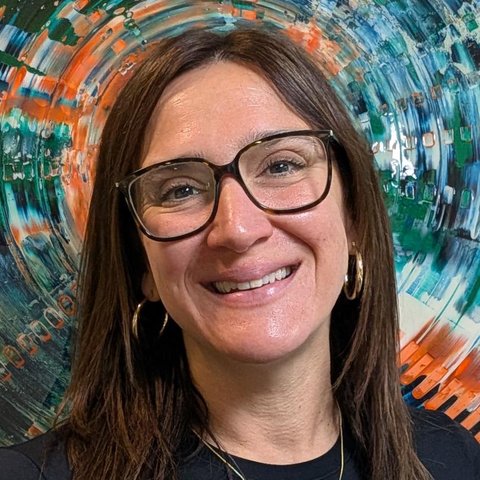
Meet Élise
A graduate in social work from Université Laval in 2005, Élise has developed experience with children, adolescents, adults, couples and families.
Among other things, she worked in the Famille-Enfance-Jeunesse (Family-Childhood-Youth) program at a CLSC before devoting herself to independent practice in 2017.
Over the course of her practice, she has developed particular expertise in neurodiversity, with children, adults and their loved ones, as well as in psychosocial assessment of incapacity.
Her approach is, among other things, systemic and solution-focused. She seeks to understand the person within their environment, recognize their strengths and build concrete avenues with them to improve their situation.
Empathetic, attentive and dynamic, Élise places great importance on building a relationship of trust and an environment where each person can speak freely about what they are experiencing, without judgment.
Her approach is based on respect for the person, their integrity, their reality and their pace.
A first step
You do not need to have all the answers before consulting.
The first session is precisely a chance to understand your situation, determine your needs and identify the support options that could suit you.
Our team can guide you.
Frequently asked questions
For a private consultation, a medical referral is generally not required to book an appointment directly with a social worker.
However, certain specific processes or certain insurers may have their own requirements.
No.
You can consult for a major situation as well as for support with a difficulty that is starting to affect your daily life.
It may also be appropriate to consult preventively or when you simply wish to improve certain aspects of your functioning.
The systemic approach seeks to understand a person by taking into account the different environments in which they live.
For example, a family difficulty can affect work, just as a professional difficulty can affect the couple or the family.
This approach makes it possible to observe the interactions between these different elements.
This approach pays particular attention to the desired changes, the person’s strengths, the available resources and the elements that are already working.
It makes it possible to gradually build concrete avenues rather than focusing solely on the difficulties.
Yes.
Depending on the nature of the situation and the type of support sought, couples sessions may be offered.
Yes.
Élise has experience with children, adolescents and their families.
Depending on the child’s age and the situation, the work may involve the child, the parents or various family members.
Yes.
Élise supports children, adults and their loved ones with various realities related to neurodiversity.
The goal may be, for example, to better understand how the person functions, identify their needs and develop strategies adapted to their environment.
However, social work intervention does not replace a diagnostic assessment when a formal diagnosis is sought.
Yes, social work services can be offered as part of corporate agreements or employee assistance programs.
Businesses can contact the clinic to discuss their needs and the various possible arrangements.
This varies depending on each person’s situation and goals.
Some people consult for a few targeted sessions, while others want more regular support.
The frequency and duration of support are discussed with you and can be reassessed over time.
Consultations are conducted in accordance with the professional obligations applicable to the practice of social work and to the protection of personal information, subject to the exceptions provided for by law.
Are you going through a personal, family, relationship or professional difficulty?
Would you like to better understand a situation related to neurodiversity?
Looking for concrete avenues to restore a better balance?
The first session is a chance to take the time to understand your situation and determine the next steps with you.
Social work at the Clinique IPS du Palais
Saint-Hyacinthe
The information on this page is provided for informational purposes and does not replace a consultation with a professional.