Consultations are generally offered in French: please confirm with the clinic (579 305-0344). The French version of this site prevails. Translation under professional review.
Weight management · Saint‑HyacintheAssessment by an NP
Weight management: a personalized medical approach
Understand what influences your weight before choosing a strategy.
Weight management is not just about “eating less” or “moving more.” Weight can be influenced by many factors: metabolism, sleep, hormones, medications, eating habits, physical activity, mental health, certain chronic diseases, life changes and individual predispositions.
At Clinique IPS du Palais, the first goal is to understand your overall situation, and then to determine with you which strategies may be relevant.
Care may include lifestyle changes, additional tests, collaboration with other professionals and, when indicated, medication.
Before proposing a weight management plan, it is important to understand what may be contributing to weight gain or making weight loss more difficult.
Canadian guidelines recommend a comprehensive assessment that is not limited to the number on the scale. In particular, the assessment should look for possible causes of weight gain, health consequences and obstacles that may complicate treatment.1
The goal is to build a strategy suited to your reality rather than applying the same approach to everyone.
During the initial consultation, the nurse practitioner (NP) may review, among other things:
how your weight has changed over time;
your goals;
your eating habits;
your level of physical activity;
your sleep;
your medications;
your personal and family medical history;
certain hormonal or metabolic conditions;
your cardiovascular risk factors;
and treatments you have already tried.
Beyond the scale
Weight is only one part of the assessment
The number on the scale provides information, but on its own it does not describe a person's health. Depending on the situation, the assessment may also take into account:
body mass index
waist circumference
blood pressure
body composition
blood sugar
cholesterol and triglycerides
metabolic health
the presence of associated diseases
the impact of weight on mobility, sleep and quality of life
Obesity Canada’s recommendations also emphasize care aimed at improving health, and not only at reducing weight.1
Body composition
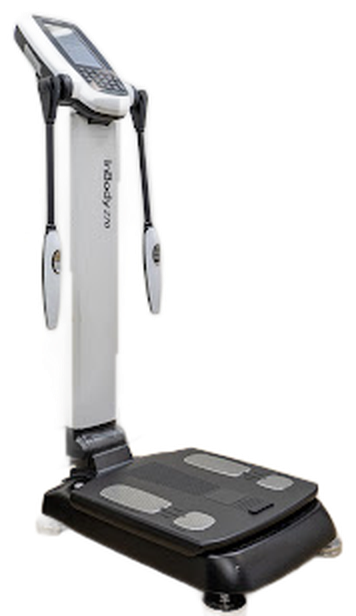
Body composition analysis with InBody
Total weight does not always help explain the changes taking place in the body.
A body composition analysis can provide additional information on various body parameters. Depending on the services used at the clinic, the InBody can, among other things, help track changes in body composition over time.
This can be useful when a person wants to better track their progress beyond the simple number on the scale.
However, the result must be interpreted in light of the overall clinical situation and does not replace a medical assessment.
Depending on your medical history and the results of the assessment, certain tests may be ordered.
Obesity Canada recommends, among other things, assessing cardiometabolic risk using blood pressure, blood glucose or HbA1c and the lipid profile, as well as other tests when the situation warrants.1
Tests are therefore not automatically the same for all patients.
They may be used, among other things, to assess:
blood glucose or glycated hemoglobin;
the lipid profile;
certain liver functions;
certain endocrine conditions when suspected;
or other parameters deemed relevant.
Lifestyle habits
Is diet part of the process?
Yes, but weight management care should not be limited to handing out a standard diet. Ideally, the nutritional approach should take into account:
your habits;
your schedule;
your preferences;
your food culture;
your hunger and satiety;
certain medical conditions;
and your goals.
When necessary, collaboration with a dietitian may be offered for more specialized support.
What about physical activity?
Physical activity is important for cardiovascular, metabolic, muscular and functional health. It can also contribute to weight management and to maintaining muscle mass.
However, the goal is not simply to “burn calories.” A realistic activity program should take into account, among other things:
your physical condition;
your limitations;
your pain;
your current level of activity;
and your goals.
Progression should be adapted to each person.
Can sleep affect weight?
Yes. Sleep is one of the relevant elements in a comprehensive weight management assessment.
Poor sleep quality, an irregular schedule or certain sleep disorders can influence various mechanisms associated with appetite, metabolic health and lifestyle habits.
When symptoms suggest a sleep problem, further assessment may be relevant.
Current medication
Can medications cause weight gain?
Some medications can affect weight in some people. That is why a medication review is part of a complete assessment.
When relevant, the NP can discuss the various possible options and their potential effects with you.
Important
Never stop or change a prescribed medication solely for the purpose of losing weight without the advice of the professional responsible for your follow-up.
Drug treatment
Can drug treatment be considered?
Yes, in certain situations.
Medications used in weight management are now one of the recognized options in the medical treatment of obesity.
The 2025 Canadian guidelines consider pharmacotherapy one of the possible pillars of obesity management, together with nutritional interventions, physical activity and behavioural interventions when these are appropriate.12
However, medication is never prescribed automatically during a weight management consultation.
Whether a treatment is appropriate depends on the medical assessment, your goals, your history, contraindications, possible adverse effects and your preferences.
Which medications can be used?
Several medications are currently approved in Canada for obesity management in certain people. The 2025 Canadian guidelines mention, among others:12
semaglutide
tirzepatide
liraglutide
naltrexone/bupropion
orlistat
The choice of treatment depends on many factors, and none of these medications is automatically appropriate for any given person.
GLP-1 and GIP medications: how do they work?
Some newer medications act on hormonal pathways involved in, among other things, the regulation of appetite, satiety and metabolism. Semaglutide acts on GLP-1 receptors, while tirzepatide acts on the GIP and GLP-1 pathways.2
These medications are not simply “appetite suppressants.”
They have indications, contraindications and potential adverse effects, and they require medical follow-up when used. Their use must always be individualized.
Realistic expectations
Can everyone receive medication to lose weight?
No.
Prescription depends on, among other things:
health status;
the degree and distribution of adiposity;
weight-related complications;
medical history;
medications being taken;
contraindications;
goals;
tolerance;
and the balance between benefits and risks.
Current Canadian recommendations also emphasize a personalized decision and are no longer based exclusively on a BMI number.3
Does medication guarantee weight loss?
No.
Response to treatment varies from one person to another.2 Some people respond more than others, and side effects can also limit or prevent the use of a treatment.
No professional can guarantee a specific result.
The purpose of follow-up is precisely to assess:
the effectiveness of the treatment;
how well it is tolerated;
its impact on health;
and its long-term relevance.
Does treatment need to be continued for a long time?
Obesity management should generally be considered long-term care rather than a one-time treatment.
The Canadian guidelines state that obesity is a chronic, progressive disease that is prone to relapse.1 They also point out that weight regain is frequently observed when certain pharmacological treatments are stopped.2
The duration of treatment should therefore be discussed individually with the professional.
Your journey
How does our care work?
1
Initial assessment
The first appointment helps us understand your situation, your goals and the factors that may influence your weight. The NP carries out a comprehensive review of your health and determines the next steps with you.
2
Additional tests as needed
Depending on the assessment, laboratory tests or other examinations may be ordered.
3
Personalized plan
Your plan may include various interventions:
lifestyle habits;
nutrition;
physical activity;
body composition monitoring;
management of metabolic factors;
collaboration with other professionals;
and drug treatment when indicated.
4
Follow-ups
Follow-up appointments make it possible to assess:
your progress;
your health status;
your test results;
your tolerance of the interventions;
your difficulties;
and the need to adjust the established plan.
Why are follow-ups important?
Weight management evolves over time. What works at the beginning may need to be adapted after a few weeks or a few months. Follow-ups therefore make it possible to modify the approach based on:
the response to treatment
changes in health
side effects
goals achieved
and new difficulties encountered
The goal is to avoid a rigid approach and to maintain a realistic, tailored strategy.
Team
Collaboration with other professionals
Weight management may require different areas of expertise. Depending on your needs, care may include, among other things, collaboration with:
Dietitian
To look more closely at eating habits and build a personalized nutrition strategy.
Physical activity or rehabilitation professionals
When physical condition, pain or certain limitations require tailored support.
Social worker or other psychosocial professionals
When stress, lifestyle habits, major changes, your relationship with food or other psychosocial factors influence the process.
Depending on the situation, an assessment may, among other things, make it possible to screen for or monitor:
prediabetes or diabetes;
hypertension;
cholesterol abnormalities;
certain liver problems associated with adiposity;
sleep apnea;
or other weight-related complications.
Frequently asked questions
Frequently asked questions
Do I need to have obesity to book a consultation?
Not necessarily. A consultation may be relevant when a person wants to understand how their weight has changed, their risk factors and the different options available. The NP will determine with you whether medical management is appropriate.
Will I receive medication at the first appointment?
Not automatically. Treatment can sometimes be started at the first visit when it is appropriate and the necessary information is available. In other situations, tests or further investigation may be needed before choosing a treatment.
Is a blood test mandatory?
No. Tests are determined based on your situation and your medical history.
Do I have to stop eating certain foods?
There is no single diet that suits everyone. The goal is rather to determine a strategy that is tailored and sustainable.
Do I need to weigh myself often?
How often weight is monitored should be tailored to each person. For some patients, other indicators of health or body composition may also be useful.
Can weight be regained after losing weight?
Yes. Weight regain is common and is one of the challenges associated with the long-term management of obesity. It does not necessarily mean that a person has “failed”: it may indicate that the treatment or strategy needs to be reassessed.
Fees
Weight management at Clinique IPS du Palais
Clinique IPS du Palais offers medical weight management care in Saint-Hyacinthe.
Weight management — initial assessment
395 $
A complete medical assessment to understand your situation, your goals and the factors that may influence your weight. The NP carries out a comprehensive review of your health and works with you to determine a personalized plan. Depending on the situation, tests or additional examinations may be ordered, and treatment may be started as early as the first appointment when indicated.
Weight management — follow-up
195 $
An appointment to assess your progress, your health status and your response to the established plan. The NP can review test results, discuss treatment tolerance and make the necessary adjustments so you can continue your process in a personalized way.
Good to know before booking an appointment
No medication is automatically prescribed and no weight loss result can be guaranteed.
Recommendations depend on the clinical assessment and on each patient’s situation.
Medications, laboratory tests and additional examinations are not included in the posted fees.
Obesity Canada and the Canadian Association of Bariatric Physicians and Surgeons. Canadian Adult Obesity Clinical Practice Guideline (online version). Accessed October 4, 2026. obesitycanada.ca
Pedersen SD, Manjoo P, Dash S, et al. Canadian Adult Obesity Clinical Practice Guideline: Pharmacotherapy for Obesity Management in Adults (version 3). Obesity Canada, August 11, 2025, accessed October 4, 2026. obesitycanada.ca
Sockalingam S. A new chapter in obesity pharmacotherapy: What the latest guideline update means for Canadians. Obesity Canada, August 10, 2025, accessed October 4, 2026. obesitycanada.ca
The information on this page is provided for informational purposes only and does not replace an assessment by a health professional. No weight loss result can be guaranteed.