Consultations are generally offered in French: please confirm with the clinic (579 305-0344). The French version of this site prevails. Translation under professional review.
Metabolic health · Saint‑HyacintheComprehensive approach
Metabolic health in Saint-Hyacinthe
Understand the connections. Take care of your health as a whole.
Is your blood sugar rising? Are you concerned about your blood pressure or cholesterol? Noticing weight changes at menopause, or want to take stock of your health?
At the Clinique IPS du Palais, our approach to metabolic health brings together the assessment of your risk factors, the follow-up of your health problems and support in reaching your goals.
Health assessments, chronic diseases, weight management and hormonal health: these aspects can be addressed within a single clinical approach.
We take the time to understand your situation in order to set priorities and an appropriate care plan with you.
The basics
Metabolic health: what is it?
Metabolism includes the mechanisms that allow your body to use and store energy.
In a consultation, talking about metabolic health means, among other things, looking at your blood sugar, blood pressure, blood lipids and body fat distribution, while taking your overall health into account.
Several abnormalities can occur together and increase the risk of type 2 diabetes or cardiovascular disease.1, 2
Your weight is one piece of information among others. On its own, it is not enough to determine your health status.
An overview
Health problems that can be linked
High blood sugar, high blood pressure or excess abdominal fat can share certain risk factors. Considering them together helps guide prevention and follow-up.
Prediabetes and type 2 diabetes
Prediabetes means blood sugar that is higher than normal but does not meet the criteria for diabetes. It is an opportunity to take action to reduce the risk of progression.2
When diabetes is present, care also focuses on preventing its complications and on cardiovascular and kidney health.3
Blood pressure and cholesterol
High blood pressure and certain cholesterol abnormalities increase cardiovascular risk. They can be present even when you feel well.
Their management is based on your overall profile: history, smoking, diabetes, test results and other relevant factors.
Liver health
The buildup of fat in the liver, called hepatic steatosis, can be associated with metabolic factors. One term used in this case is metabolic dysfunction-associated steatotic liver disease, or MASLD.4
It is frequently associated with type 2 diabetes and obesity, but can also affect people without apparent excess weight. A targeted assessment may be indicated depending on your profile.
Weight and body composition
In some situations, excess fat mass contributes to metabolic problems. Weight management may then be part of treatment, with goals adapted to your health.
Each problem keeps its own assessment and treatment criteria. A comprehensive approach helps coordinate decisions.
Who is it for?
Who is this approach for?
You can discuss it with our team if:
You don't need to want to lose weight to take an interest in your metabolic health.
You want to review your risk factors.
You have received an abnormal blood sugar, cholesterol or blood pressure result.
You are living with prediabetes, type 2 diabetes, high blood pressure or dyslipidemia.
A professional has told you about hepatic steatosis.
Your weight or waist circumference is changing and you would like an assessment.
You have a family history of diabetes or cardiovascular disease.
You are going through perimenopause or menopause and want to address your health as a whole.
You have several health problems and want to better understand the priorities of your follow-up.
The health assessment
A starting point to understand your situation
Before choosing an intervention, we review what really applies to you.
A conversation about your health and daily life
The assessment may cover:
Your personal and family history.
The treatments and supplements you take.
Your symptoms and concerns.
Your diet, sleep and physical activity.
Your tobacco and alcohol use.
Your weight history.
Your hormonal health, when relevant.
Constraints that may affect your access to care or your habits.
Measurements and tests chosen according to your needs
Depending on your situation, the NP may suggest:
Possible assessment
What it helps examine
Blood pressure
Screening for or follow-up of high blood pressure
Blood sugar or glycated hemoglobin, called HbA1c
Blood sugar regulation
Lipid panel
Cholesterol and triglycerides
Kidney function and, in some situations, urine albumin
Kidney health, particularly when diabetes is present
Liver tests and targeted investigations
Certain liver abnormalities or risks
Weight, waist circumference and body composition
Complementary elements of the assessment
Thyroid assessment or other targeted tests
A specific clinical question, when they are indicated
This list is not a set of routinely prescribed tests. The assessment is tailored to your history, your previous results and the decisions it will help make.
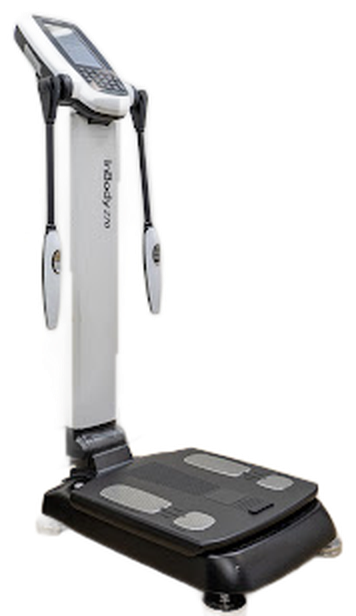
The InBody analysis estimates, among other things, fat mass, muscle mass and body water. It can provide additional information during follow-up.
Its results depend on measurement conditions and must be interpreted in context.
InBody does not directly measure insulin resistance and does not replace blood tests or clinical assessment.
Nutrition
Linking recommendations to your daily life
When nutritional support is relevant, a referral to a dietitian-nutritionist may be offered.
The goal is to help you turn recommendations into choices adapted to your preferences, budget, schedule and needs.
If you are already receiving nutrition follow-up, we can take into account the work already done. With your consent, collaboration between professionals can support a consistent plan.
The approach is built with you, taking into account what is achievable in your life.
Hormonal health
Hormonal health and metabolic health: understanding how they relate
Hormones play a role in how metabolism works. However, weight gain, fatigue or difficulty feeling well are not, on their own, enough to conclude that there is a hormonal problem.
The assessment helps distinguish what may be due to a hormonal transition, an illness, a treatment or other factors.
Perimenopause and menopause
The menopausal transition can be accompanied by changes in body fat distribution. Aging, sleep and lifestyle habits also play a role in weight changes.5
This period is an opportunity to review symptoms, but also blood pressure, cardiovascular risk factors and metabolic health.
You can therefore address your menopause symptoms and your metabolic concerns as part of the same clinical approach.
What role does hormone therapy play?
When indicated, hormone therapy may be offered to relieve certain menopause symptoms, after a personalized assessment of benefits and risks.6
Among other things, it can improve symptoms that disrupt daily life, such as hot flashes and night sweats.
Hormone therapy is not a weight loss treatment. It is not prescribed to prevent cardiovascular disease.5, 6
Treating hormonal symptoms and treating metabolic risk factors each have their place in your care plan.
What about the thyroid?
Hypothyroidism can contribute to certain symptoms, including fatigue and weight gain. An assessment may be relevant depending on your situation.7
However, the presence of these symptoms is not enough to make the diagnosis. Thyroid hormones are not a weight loss treatment for people whose thyroid function is normal.7
When several health problems are present, follow-up makes it possible to review the treatment as a whole. Depending on your situation, appointments may be used to:
Explain your results and how they change over time.
Set priority goals with you.
Reassess the effectiveness and tolerability of medications.
Adjust treatment when indicated.
Plan relevant monitoring tests.
Coordinate care with the professionals already involved.
A team by your side
Follow-up shared between the NP and our clinical nurses
At Clinique IPS du Palais, the clinical nurse works closely with our NPs. She can provide follow-up for certain health problems and support you between appointments.
Nursing follow-up
Assessment of your condition, sample collection and care according to applicable protocols or prescriptions, and continuity of your follow-up.
Health education
Clear explanations about your condition, your treatments and your results, and support with prevention and adopting healthy lifestyle habits.
Contact the team to choose the length and type of appointment
You don't need to determine the diagnosis or the necessary tests yourself before booking an appointment.
Frequently asked questions
Your questions about metabolic health
Can you have a metabolic problem with a weight considered normal?
Yes. Weight cannot rule out high blood pressure, a cholesterol abnormality or a blood sugar disorder. The assessment takes other elements into account, including your history and your results.
What is metabolic syndrome?
It is a cluster of abnormalities that includes, among others, a large waist circumference, high blood pressure, high blood sugar, high triglycerides and low HDL cholesterol.1
The presence of at least three criteria, depending on the thresholds used, may correspond to metabolic syndrome. The NP interprets these elements in your context.
Does a metabolic assessment include a full hormonal assessment?
Not routinely. Tests are chosen according to the clinical questions. Certain diagnoses, such as menopause in typical situations after age 45, generally do not require hormone level testing.6
Should I wait until I have symptoms?
No. Certain risk factors can be present without symptoms. Whether screening is appropriate depends on factors such as your age, your history and your health status.
Do I absolutely have to lose weight?
Goals are personalized. A weight intervention may be relevant, but your follow-up can also focus on blood pressure, blood sugar, blood lipids and habits that support your health.
Can hormone therapy replace treatment for cholesterol or diabetes?
No. The indications are different. Hormone therapy does not replace the specific management of diabetes, high blood pressure or a lipid abnormality.
Will I have to take medication?
Not necessarily. A prescription depends on your assessment and the expected benefits. Options are discussed with you; no medication is prescribed automatically.
Do I need to fast for the first appointment?
Don't fast unless you have been instructed to. If tests require special preparation, the team will explain it to you.
What should I bring?
Bring your list of medications and supplements, your recent results if you have them, as well as your blood pressure or blood sugar readings if you already take them at home.
What are the fees?
The fee depends on the type and length of the appointment. Our team will specify the applicable fees, as well as those for any additional services or tests offered.
Take stock of your health
Would you like to understand your results, review the follow-up of a chronic disease, or address your weight and hormonal health together?
At Clinique IPS du Palais, in Saint-Hyacinthe, we suggest starting with an assessment of your situation and your priorities.
Understanding your health. Choosing the next steps with you.
National Heart, Lung, and Blood Institute (NHLBI), NIH. What Is Metabolic Syndrome? Last updated: May 18, 2022. nhlbi.nih.gov
Centers for Disease Control and Prevention (CDC). Prediabetes – Your Chance to Prevent Type 2 Diabetes. Last reviewed: December 26, 2024. cdc.gov
Diabetes Canada. Chapter 29: Chronic Kidney Disease in Diabetes (2025 update), Clinical Practice Guidelines. guidelines.diabetes.ca
National Institute of Diabetes and Digestive and Kidney Diseases (NIDDK), NIH. Definition & Facts of NAFLD & NASH (also called MASLD). niddk.nih.gov
The Menopause Society. MenoNote: Midlife Weight Gain.menopause.org
National Institute for Health and Care Excellence (NICE). Menopause: identification and management (NG23), updated November 2024. Accessed September 26, 2026. nice.org.uk
American Thyroid Association. Thyroid and Weight. Accessed September 26, 2026. thyroid.org
The information on this page is provided for information purposes only and does not replace a consultation with a health professional.