
Kids' corner · Comic No 13
My body belongs to me
A comic to talk with children about respecting their body: everyone’s bubble, asking first, privacy, secrets they can talk about and the adults who can help. With tips for parents.
- 8 pages
- To read together
- Body respect

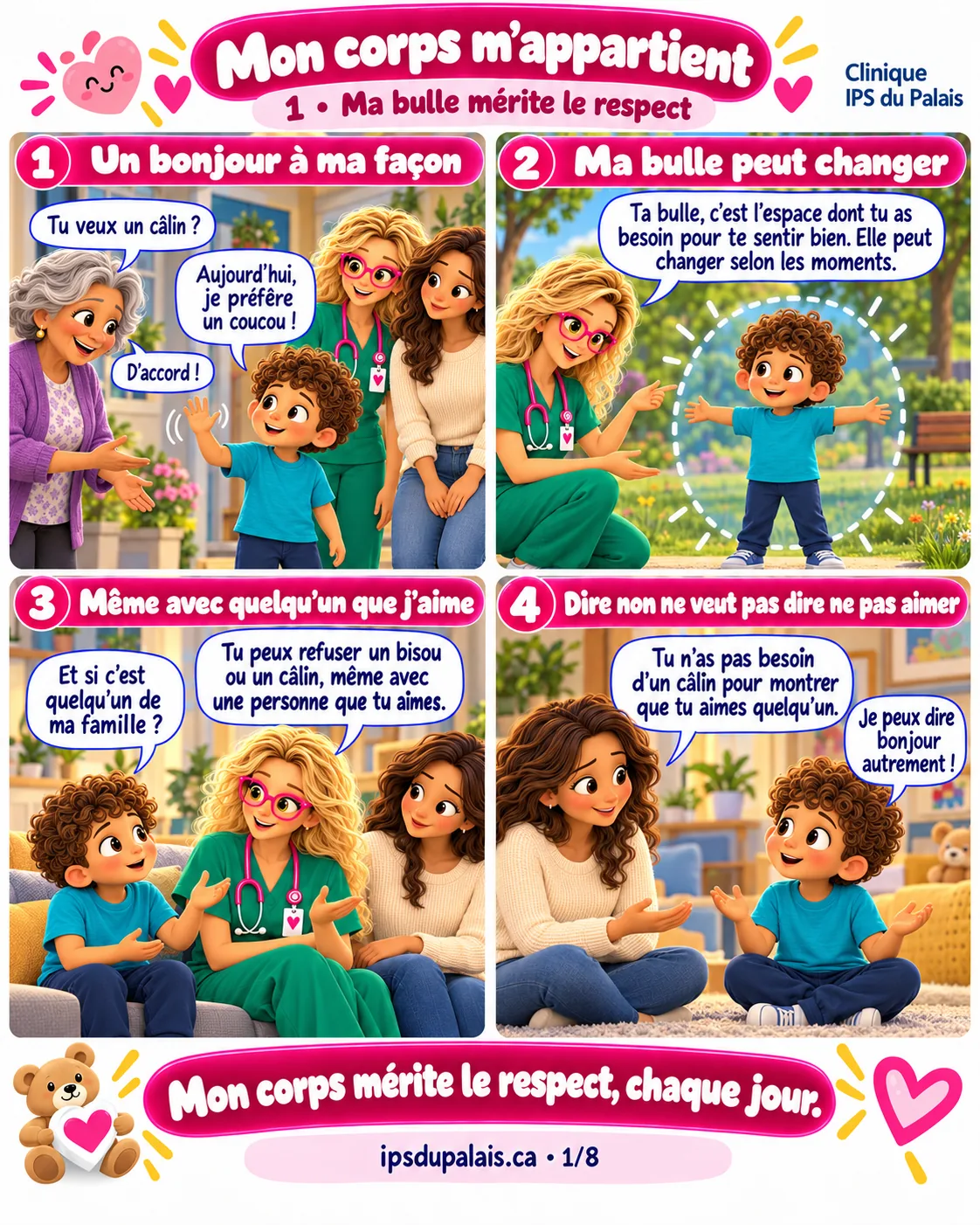 Enlarge page 1
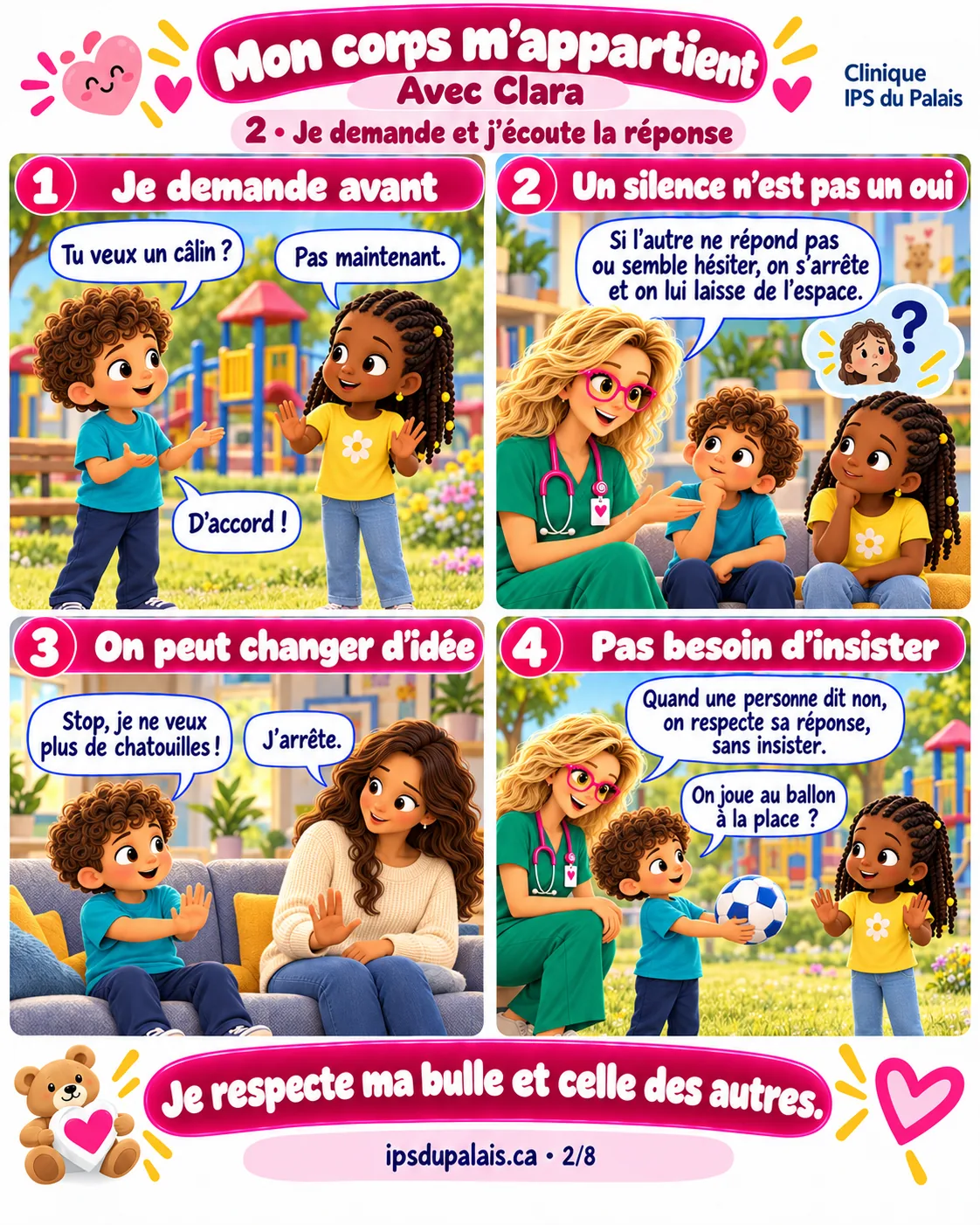 Enlarge page 2
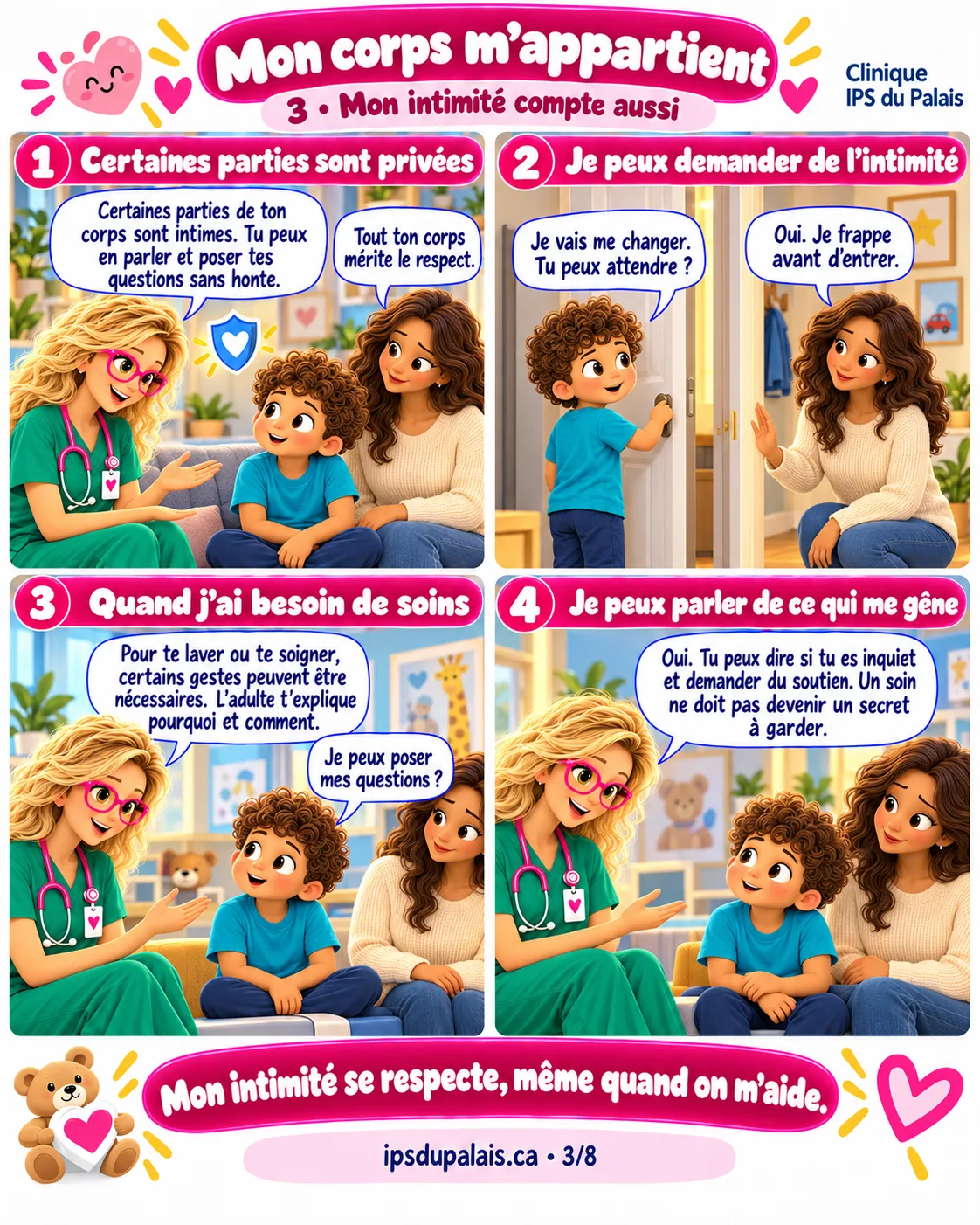 Enlarge page 3
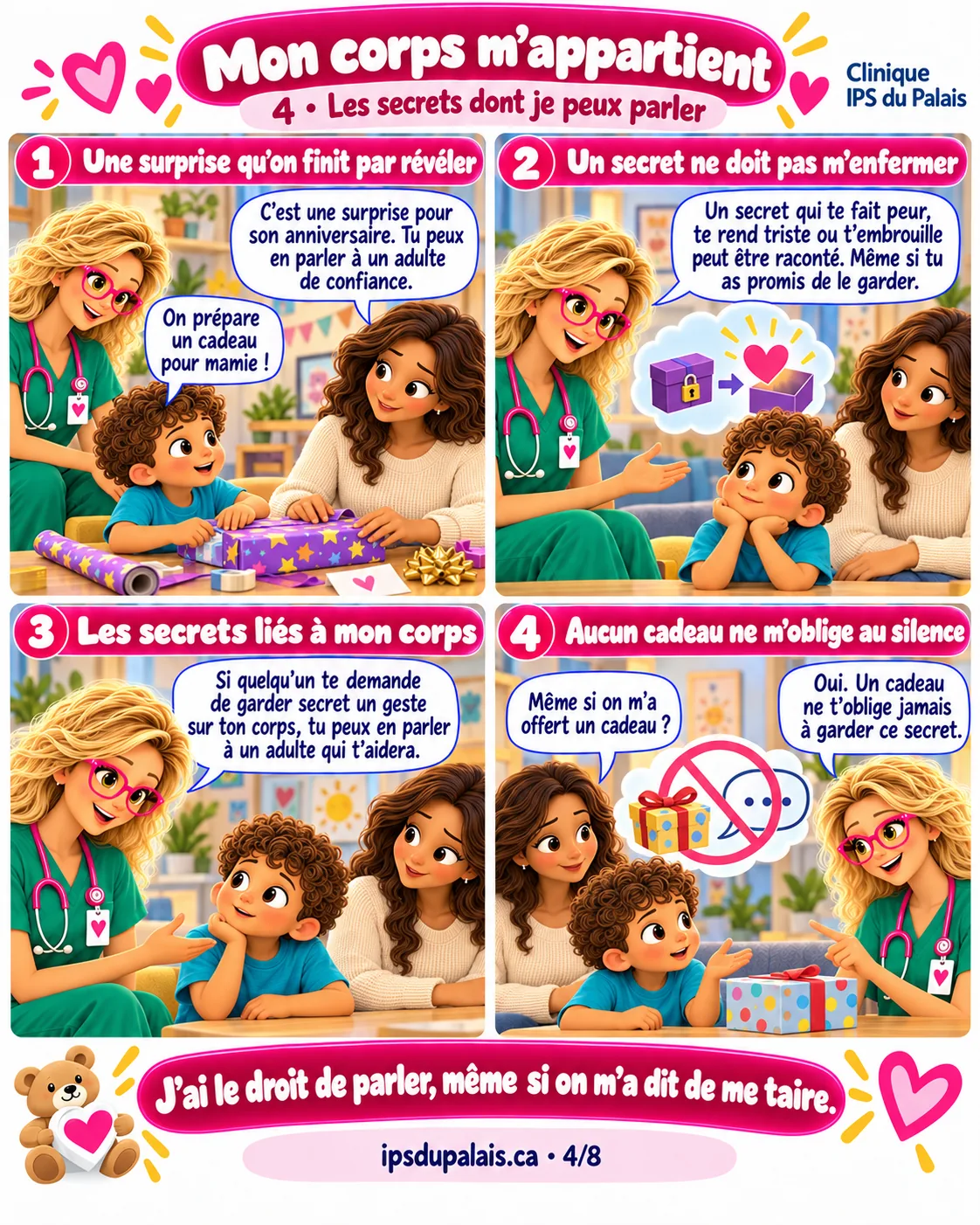 Enlarge page 4
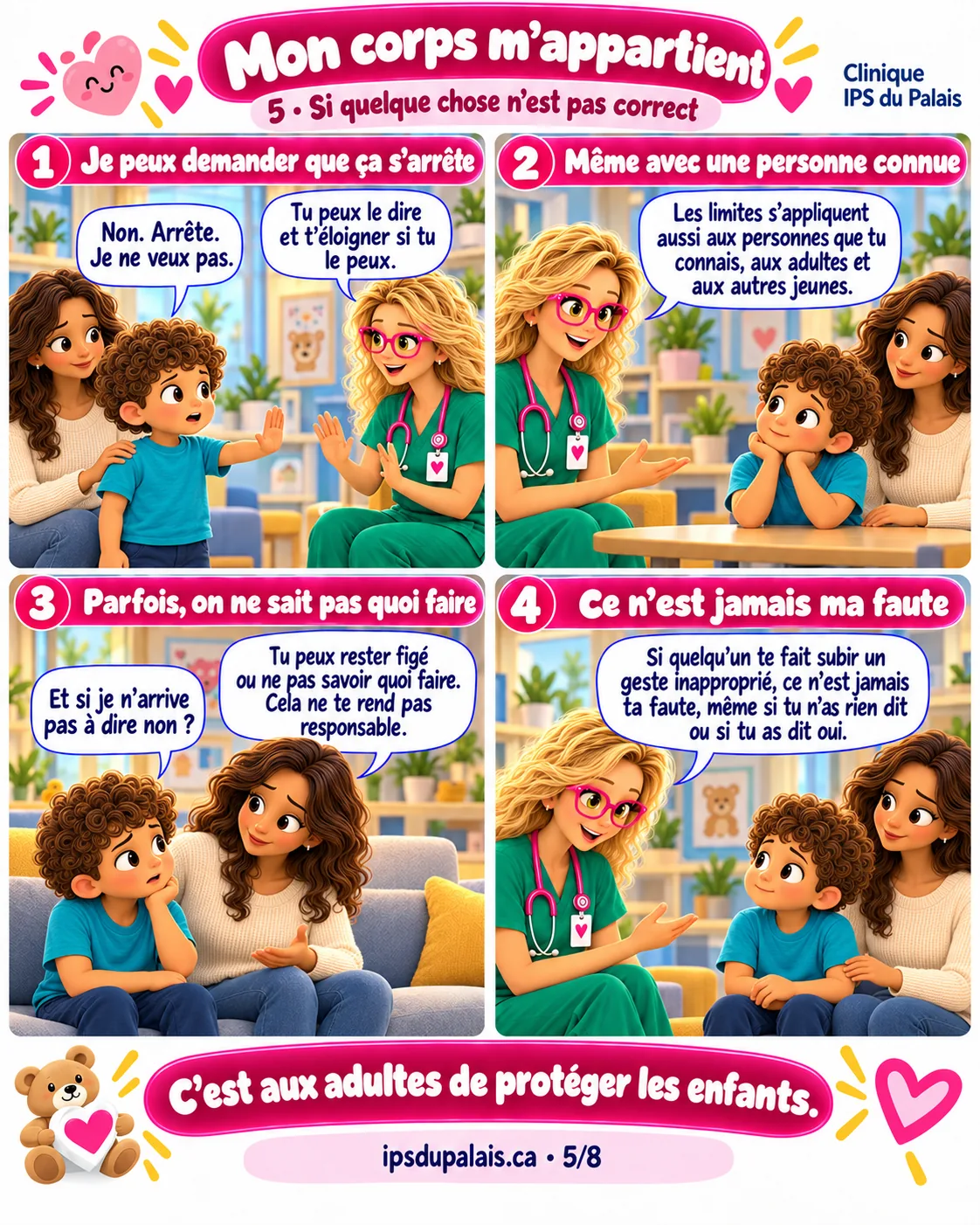 Enlarge page 5
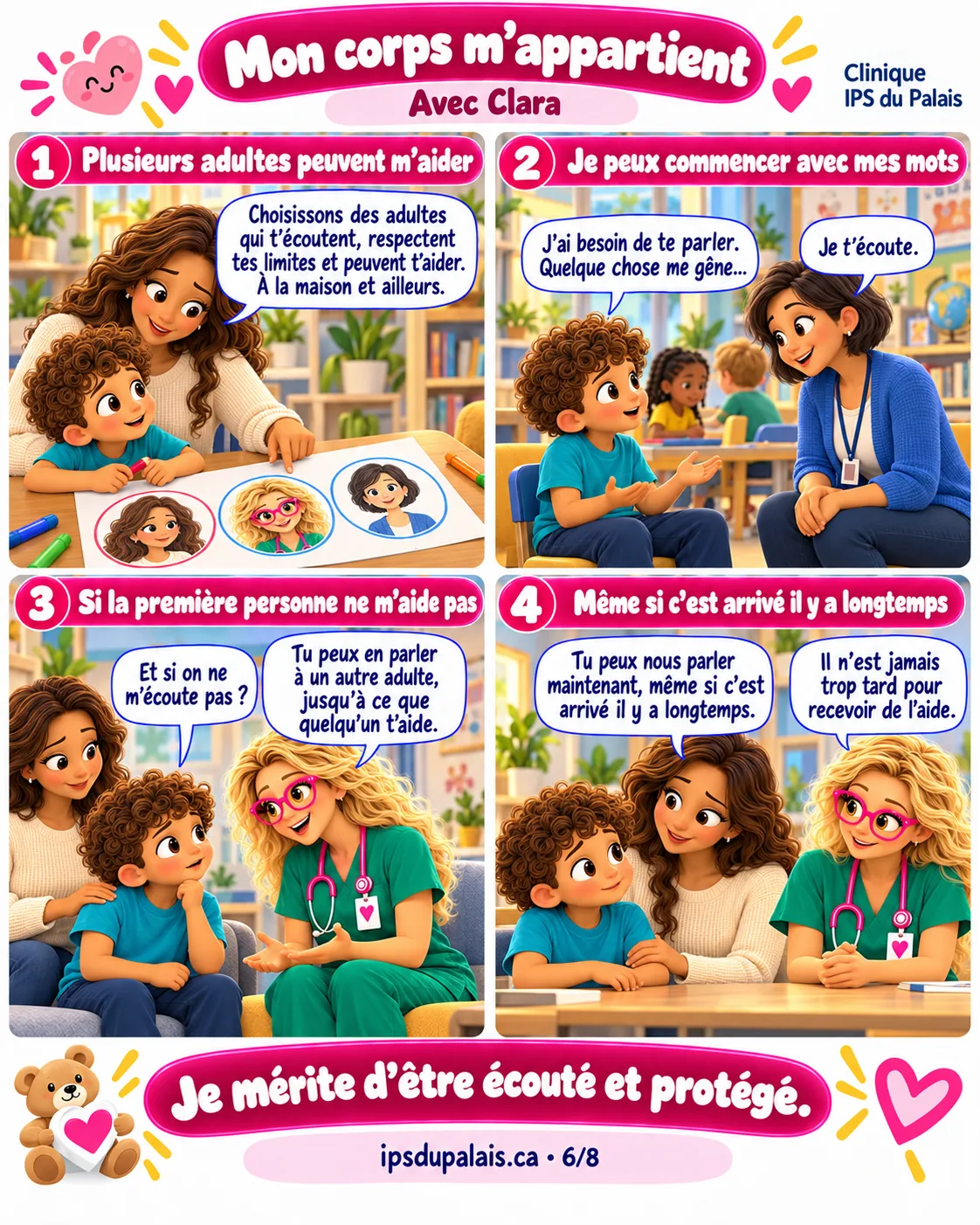 Enlarge page 6
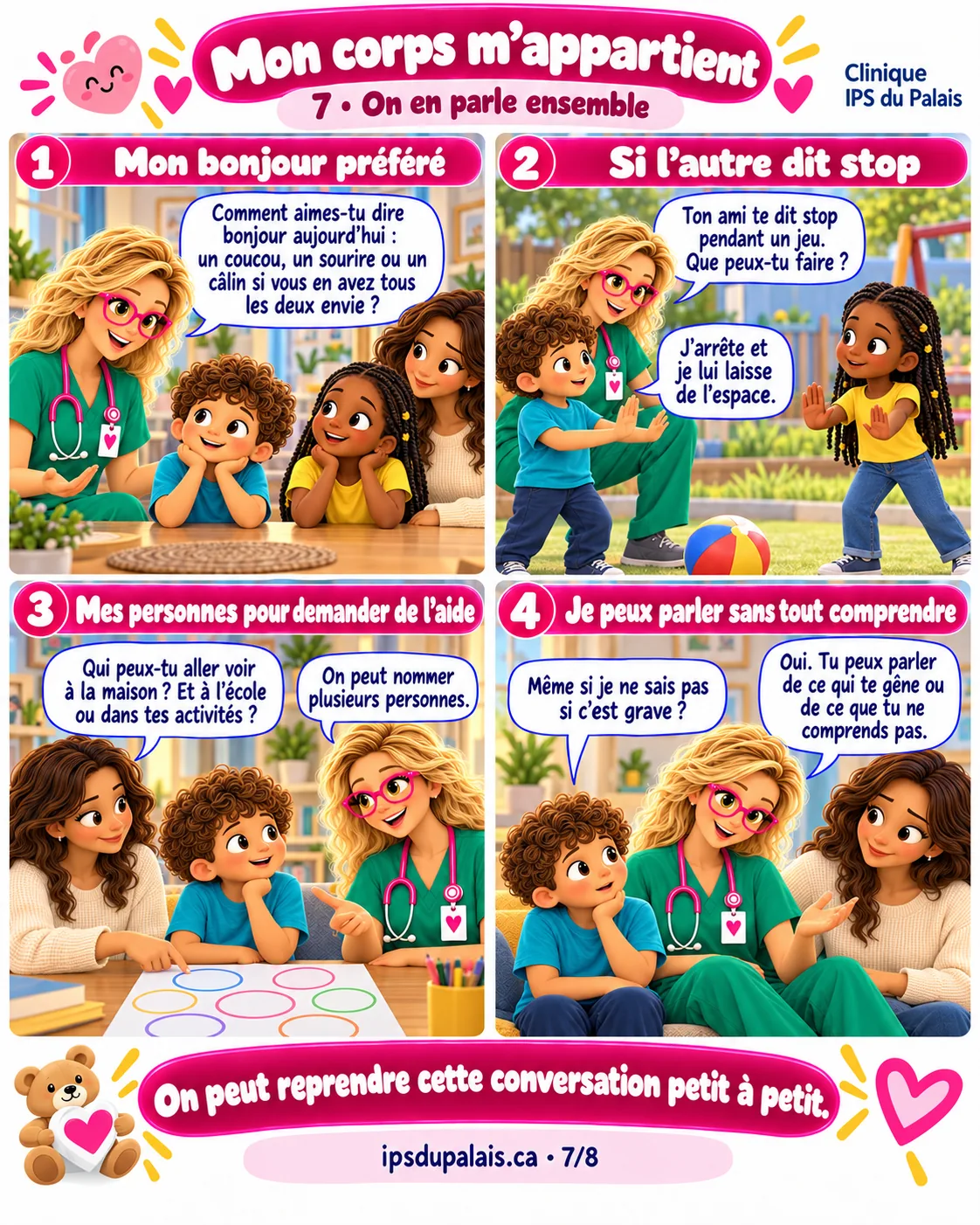 Enlarge page 7
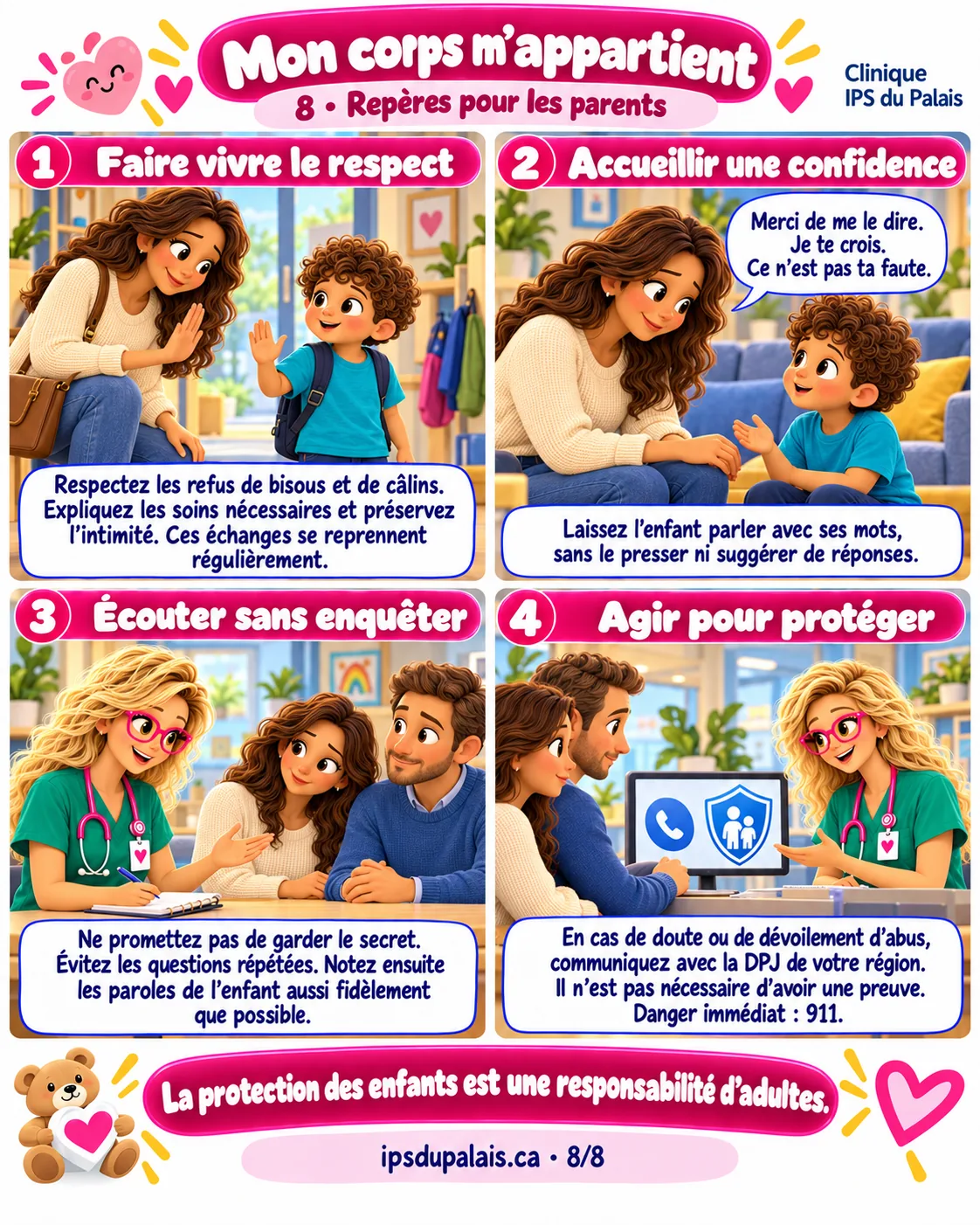 Enlarge page 8

Well done, you read the whole story!
You can read it again whenever you like, or choose another story with Clara.
Read the comic text in English
Page 1 — My bubble deserves respect
1. Saying hello my way
- The grandmother: “Would you like a hug?”
- The child: “Today, I’d rather wave hello!”
- The grandmother: “Okay!”
2. My bubble can change
- Clara: “Your bubble is the space you need to feel good. It can change from one moment to another.”
3. Even with someone I love
- The child: “What if it’s someone in my family?”
- Clara: “You can say no to a kiss or a hug, even with someone you love.”
4. Saying no doesn’t mean not loving
- The mother: “You don’t need a hug to show you love someone.”
- The child: “I can say hello another way!”
“My body deserves respect, every day.”
Read together: how do you like to say hello?
Page 2 — I ask and I listen to the answer
1. I ask first
- The child: “Do you want a hug?”
- A friend: “Not right now.”
- The child: “Okay!”
2. Silence is not a yes
- Clara: “If the other person doesn’t answer or seems unsure, we stop and give them space.”
3. We can change our mind
- The child: “Stop, I don’t want any more tickles!”
- The mother: “I’m stopping.”
4. No need to insist
- Clara: “When someone says no, we respect their answer, without insisting.”
- The child: “Shall we play ball instead?”
“I respect my bubble and other people’s bubbles.”
Read together: how do you know a friend wants to play?
Page 3 — My privacy matters too
1. Some parts are private
- Clara: “Some parts of your body are private. You can talk about them and ask questions without feeling ashamed.”
- The mother: “Your whole body deserves respect.”
2. I can ask for privacy
- The child: “I’m going to get changed. Can you wait?”
- The mother: “Yes. I knock before coming in.”
3. When I need care
- Clara: “To wash you or take care of you, some touches may be needed. The adult explains why and how.”
- The child: “Can I ask my questions?”
4. I can talk about what bothers me
- Clara: “Yes. You can say if you’re worried and ask for support. Care should never become a secret to keep.”
“My privacy is respected, even when someone is helping me.”
Read together: how can you ask for a moment of privacy?
Page 4 — Secrets I can talk about
1. A surprise that gets revealed
- The child: “We’re making a present for Grandma!”
- The mother: “It’s a surprise for her birthday. You can talk about it with a trusted adult.”
2. A secret shouldn’t trap me
- Clara: “A secret that scares you, makes you sad or confuses you can be told. Even if you promised to keep it.”
3. Secrets about my body
- Clara: “If someone asks you to keep a touch on your body a secret, you can tell an adult who will help you.”
4. No gift can make me keep quiet
- Speech bubble: “Even if someone gave me a present?”
- Clara: “Yes. A gift never means you have to keep that secret.”
“I have the right to speak, even if I was told to keep quiet.”
Read together: what is the difference between a surprise and a secret?
Page 5 — If something isn’t right
1. I can ask for it to stop
- The child: “No. Stop. I don’t want to.”
- Clara: “You can say it and move away if you can.”
2. Even with someone I know
- Clara: “Boundaries also apply to people you know, to adults and to other young people.”
3. Sometimes, we don’t know what to do
- The child: “What if I can’t manage to say no?”
- The mother: “You might freeze or not know what to do. That doesn’t make you responsible.”
4. It’s never my fault
- Clara: “If someone does something inappropriate to you, it is never your fault, even if you didn’t say anything or if you said yes.”
“It’s up to adults to protect children.”
Read together: what can you say if you don’t like a touch?
Page 6 — Many adults can help me
1. Many adults can help me
- The mother: “Let’s choose adults who listen to you, respect your limits and can help you. At home and elsewhere.”
2. I can start with my own words
- The child: “I need to talk to you. Something is bothering me…”
- An adult at school: “I’m listening.”
3. If the first person doesn’t help me
- The child: “What if no one listens to me?”
- Clara: “You can talk to another adult, until someone helps you.”
4. Even if it happened a long time ago
- The mother: “You can talk to us now, even if it happened a long time ago.”
- Clara: “It’s never too late to get help.”
“I deserve to be listened to and protected.”
Read together: which adults can help you?
Page 7 — Let’s talk about it together
1. My favourite hello
- Clara: “How would you like to say hello today: a wave, a smile or a hug if you both feel like it?”
2. If the other person says stop
- Clara: “Your friend says stop during a game. What can you do?”
- The child: “I stop and give them space.”
3. My people to ask for help
- The mother: “Who can you go to at home? And at school or in your activities?”
- Clara: “We can name several people.”
4. I can talk without understanding everything
- The child: “Even if I don’t know whether it’s serious?”
- Clara: “Yes. You can talk about what bothers you or what you don’t understand.”
“We can come back to this conversation little by little.”
Read together: who are your people to ask for help?
Page 8 — Tips for parents
1. Make respect part of everyday life
- Text box: “Respect refusals of kisses and hugs. Explain necessary care and protect privacy. Come back to these conversations regularly.”
2. Welcoming a disclosure
- The mother: “Thank you for telling me. I believe you. It’s not your fault.”
- Text box: “Let the child speak in their own words, without rushing them or suggesting answers.”
3. Listen without investigating
- Text box: “Don’t promise to keep the secret. Avoid repeated questions. Afterwards, write down the child’s words as accurately as possible.”
4. Act to protect
- Text box: “If you have doubts or if a child discloses abuse, contact the DPJ (youth protection) in your region. You don’t need proof. Immediate danger: 911.”
“Protecting children is an adult responsibility.”
Read together: how can we come back to this conversation?
Note: educational comic; fictional characters; does not replace a consultation. Immediate danger: 911. To report a situation: the DPJ (youth protection) in your region, 24 hours a day (Montérégie: 1 800 361-5310).
For parents: good to know
- If your child confides in you, stay calm, listen without judging and reassure them: tell them they did the right thing by speaking up and that you believe them.
- Don’t promise to keep the secret. Avoid pressing the child with questions: suggestive questions can influence what they say. Let them speak freely, then write down their words as soon as possible.
- In Québec, you can report a situation to the director of youth protection (DPJ) in your region, 24 hours a day, 7 days a week. You don’t need to be certain or have proof: reasonable grounds to believe that the child’s safety or development is or may be in danger are enough.
- According to the Government of Québec, anyone who has reasonable grounds to believe that a child is being sexually abused must report it to the DPJ, even if they think the parents are taking steps to stop it.
- DPJ for Montérégie: 1 800 361-5310 (toll-free). In an emergency, call 911. If you are unsure, you can call the DPJ for information or advice.
Sources (in French): Fondation Marie-Vincent, Comment réagir en cas de doute ou de dévoilement? (page modified December 17, 2025); Government of Québec, Motifs de signalement au DPJ and Obligation de signaler (updated November 22, 2024), Coordonnées du DPJ (updated October 7, 2026). Consulted on October 21, 2026.
Psst… a little secret from Clara
In the comics, Clara puts on her scrubs to tell the story of the care. In real life, Clara is the website's virtual assistant: the clinic's nurses and health professionals are the ones who provide care. Clara is here to guide you around the website!
Kids' corner
More stories with Clara
Clara's comics are intended to inform children and their parents. They do not replace a consultation or an assessment by a health professional. In an emergency, call 911. For health advice, call Info-Santé 811. Page published on October 21, 2026.