
Kids' corner · Comic No 2
Why am I coughing, Clara?
A reassuring comic to help children understand coughing: where it comes from, how to take care of yourself at home and when to ask for help. The comic pages are in French; the full text is available in English below.
- 6 pages
- To read together
- Cough

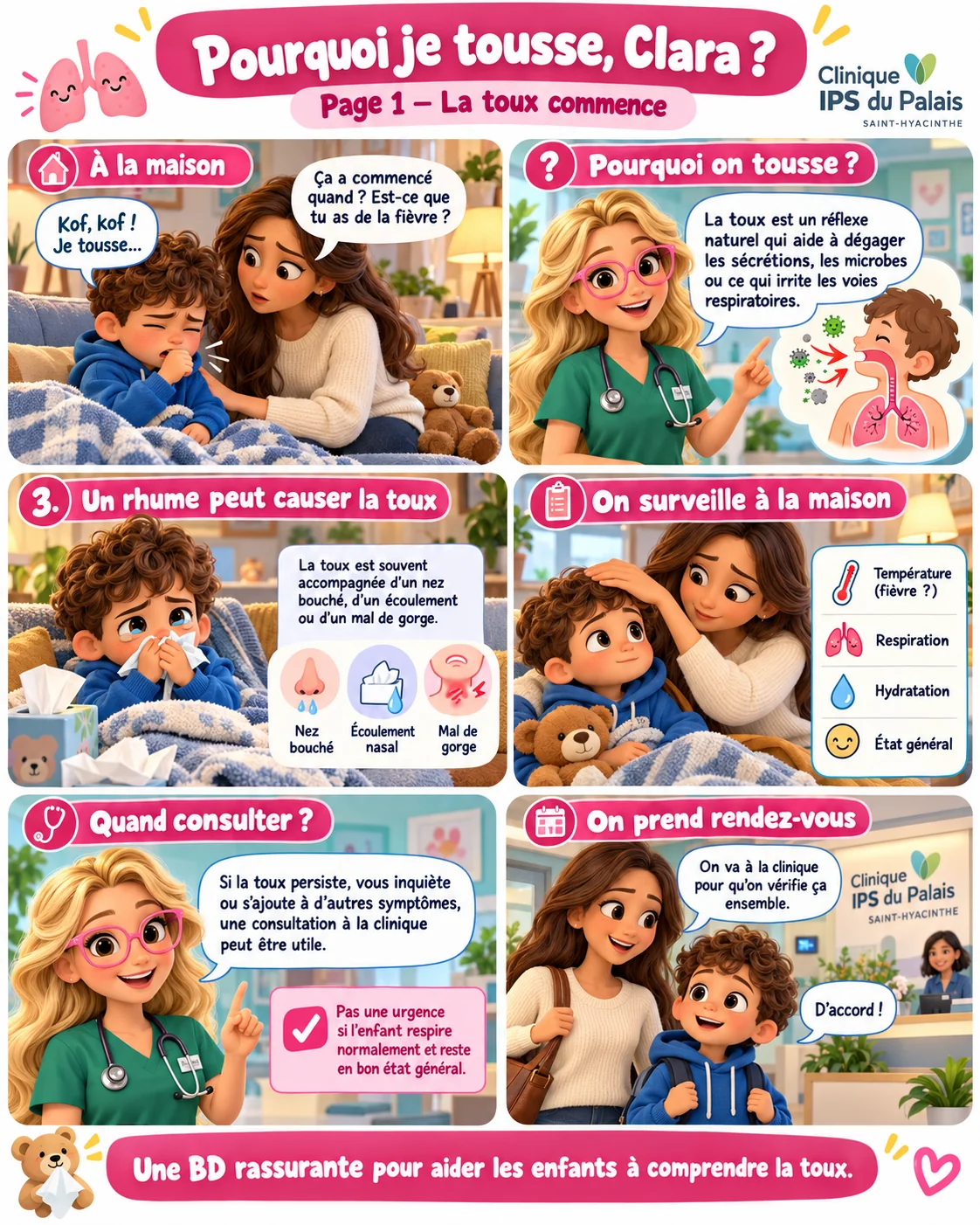 Enlarge page 1
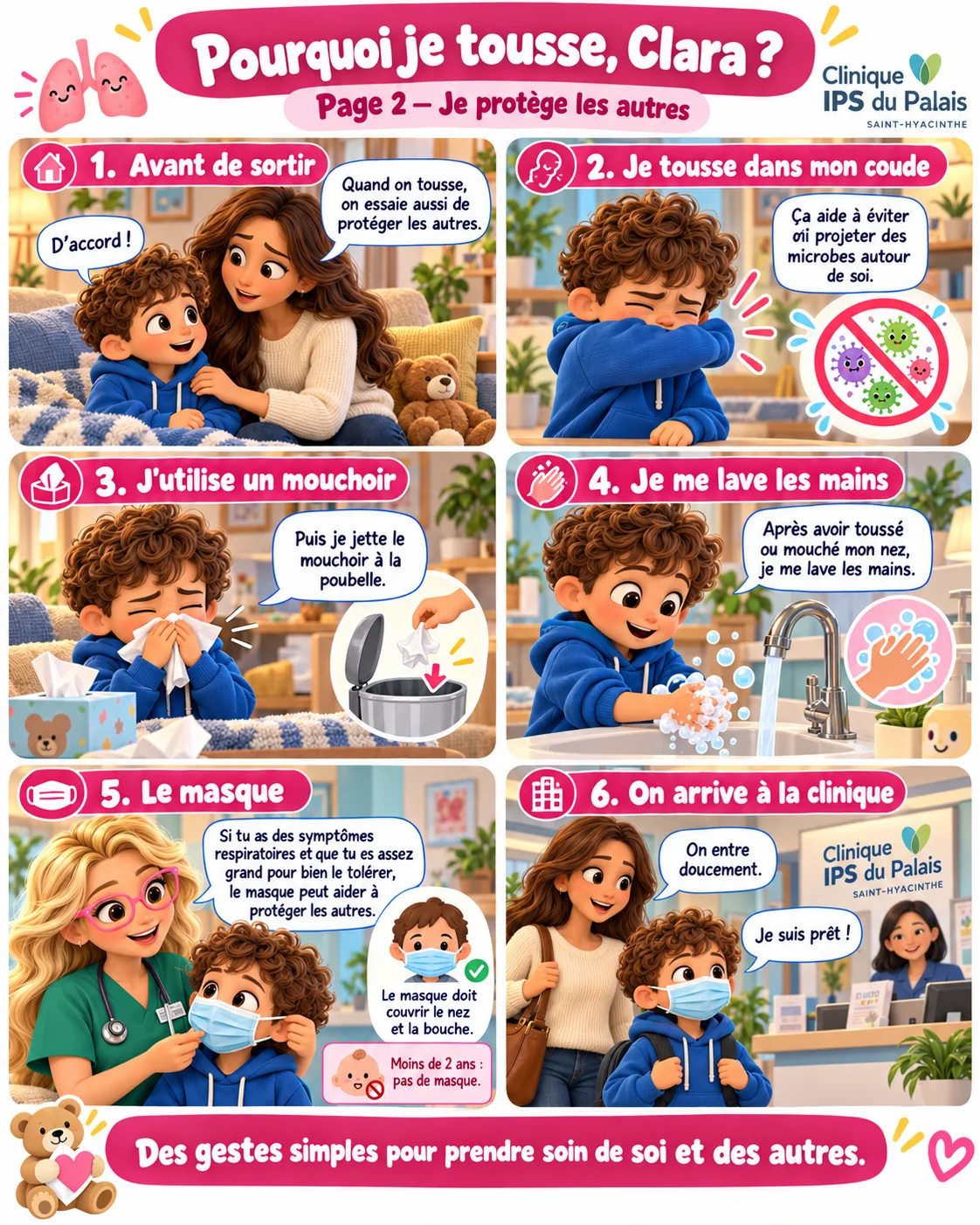 Enlarge page 2
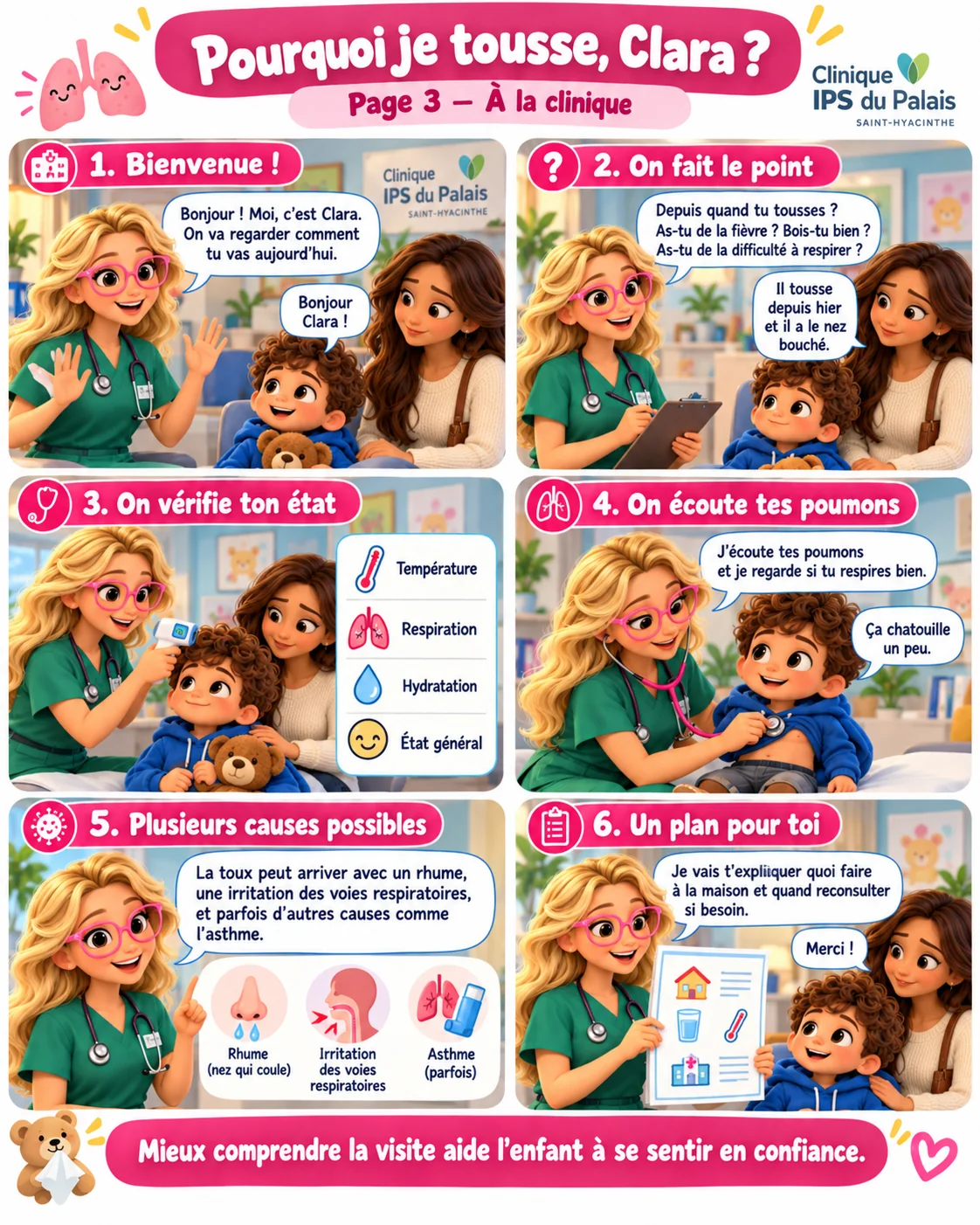 Enlarge page 3
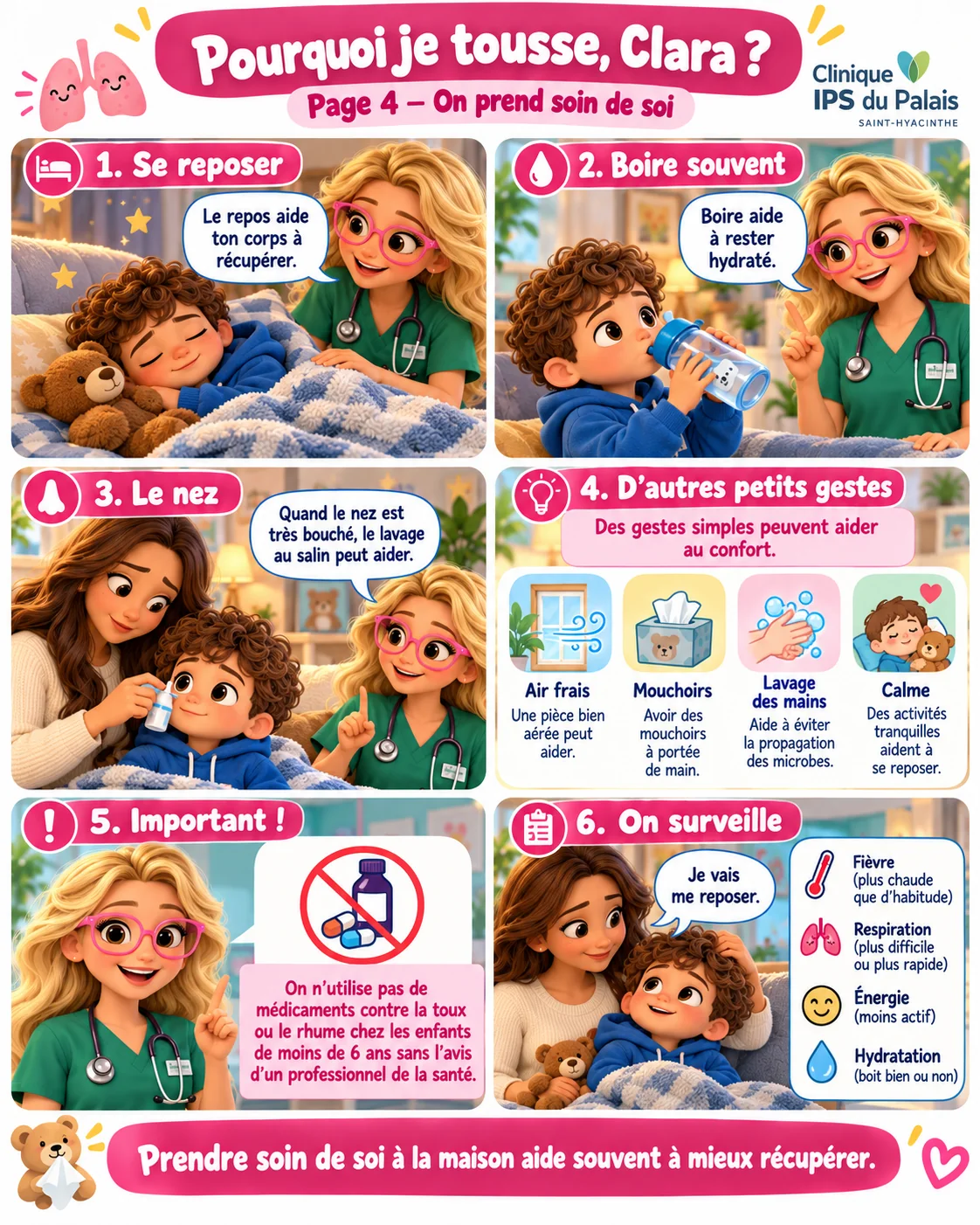 Enlarge page 4
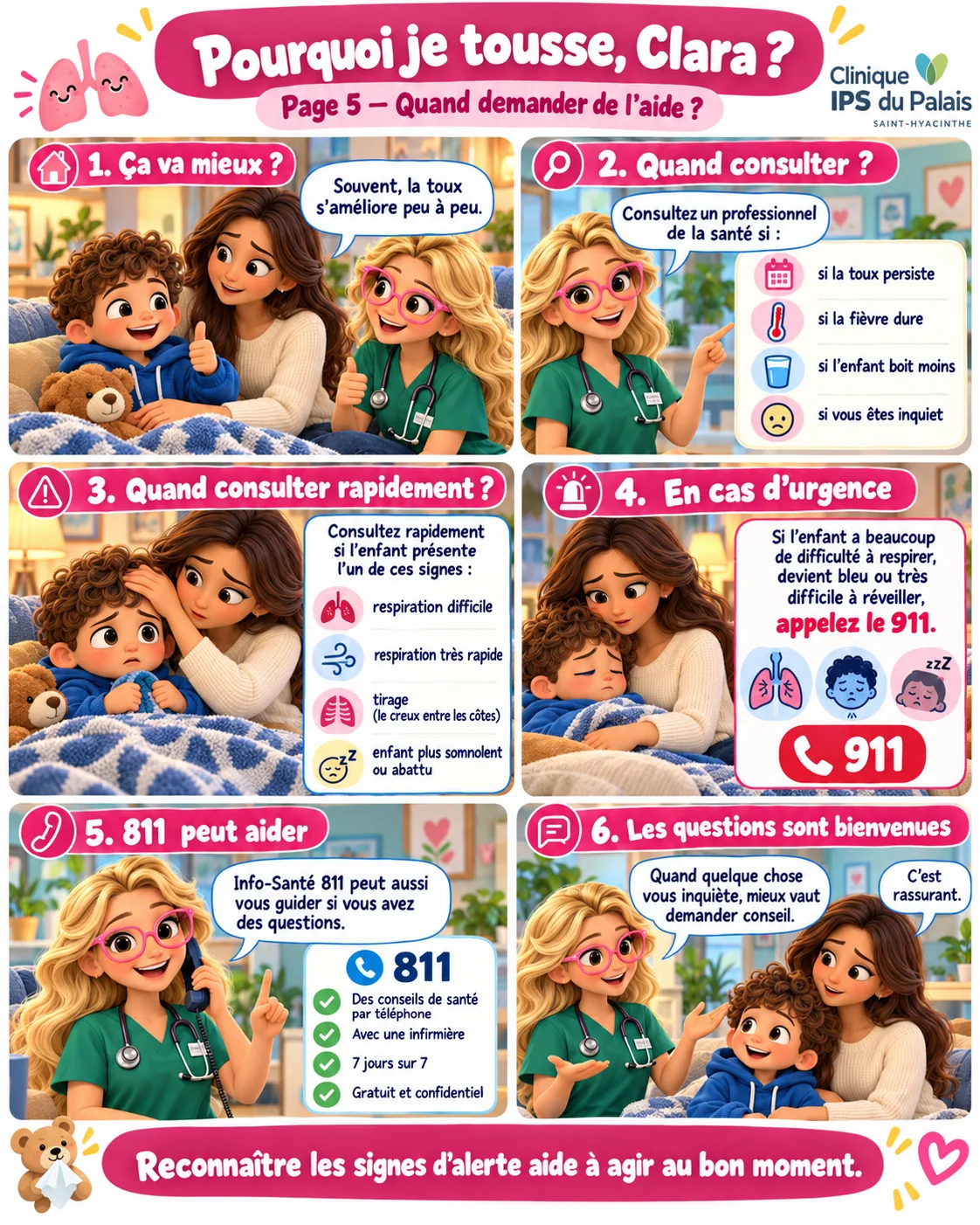 Enlarge page 5
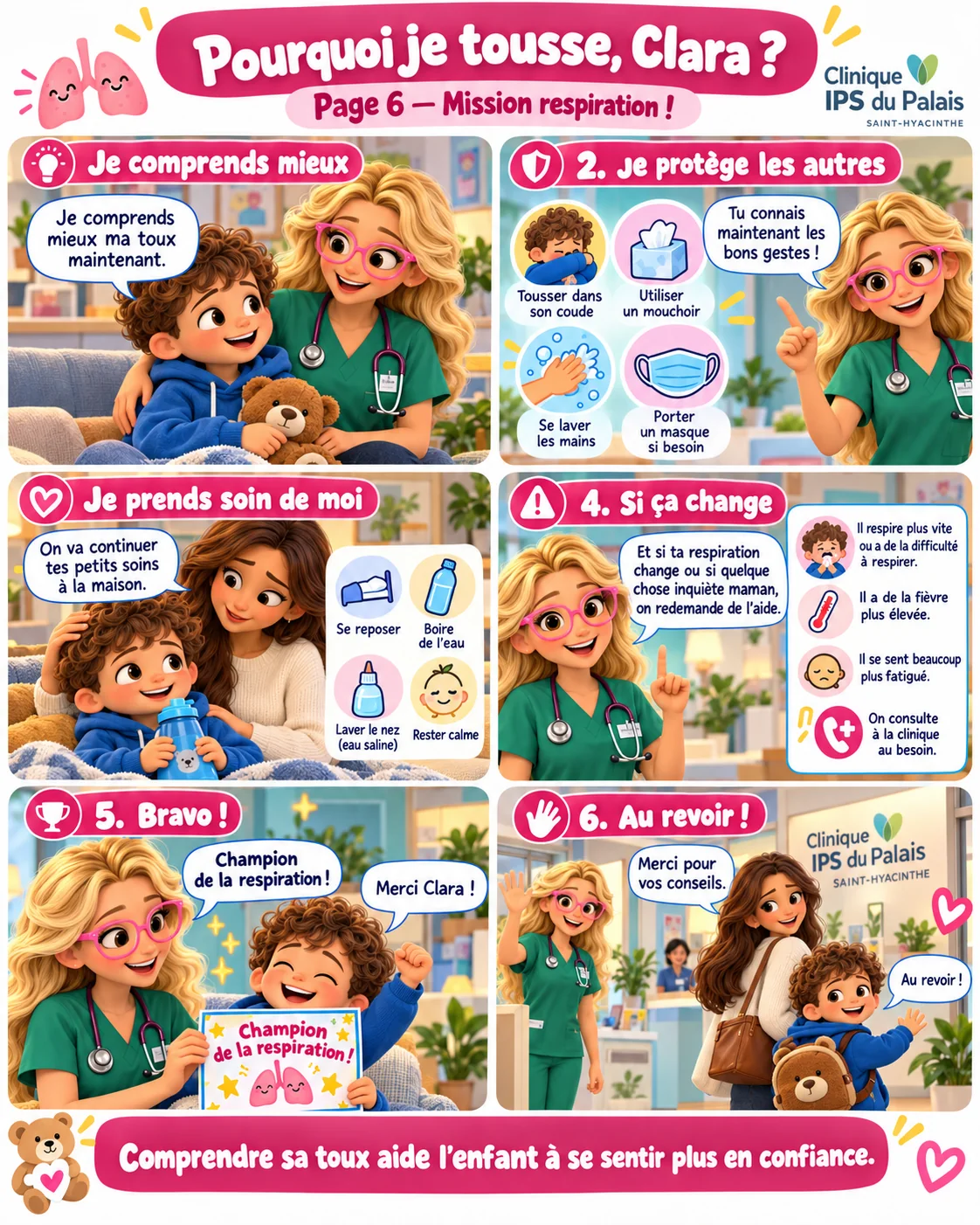 Enlarge page 6

Well done, you read the whole story!
You can read it again whenever you like, or choose another story with Clara.
Read the comic text in English
Page 1 — The cough begins
1. At home
- The child: “Cough, cough! I'm coughing…”
- The mother: “When did it start? Do you have a fever?”
2. Why do we cough?
- Clara: “Coughing is a natural reflex that helps clear secretions, germs or whatever irritates the airways.”
3. A cold can cause a cough
- A cough often comes with a stuffy nose, a runny nose or a sore throat.
- The pictures show: stuffy nose, runny nose, sore throat.
4. Watching at home
- The board shows: temperature (fever?), breathing, hydration, general condition.
5. When to see a professional?
- Clara: “If the cough persists, worries you or comes with other symptoms, a visit to the clinic can be helpful.”
- Key point: it's not an emergency if the child is breathing normally and remains in good general condition.
6. Booking an appointment
- The mother: “We'll go to the clinic so they can check it with us.”
- The child: “Okay!”
“A reassuring comic to help children understand coughing.”
Page 2 — I protect others
1. Before going out
- The mother: “When we cough, we also try to protect others.”
- The child: “Okay!”
2. I cough into my elbow
- “It helps avoid spreading germs around you.”
3. I use a tissue
- “Then I throw the tissue in the garbage.”
4. I wash my hands
- “After coughing or blowing my nose, I wash my hands.”
5. The mask
- Clara: “If you have respiratory symptoms and you're old enough to tolerate it well, a mask can help protect others.”
- Key point: the mask must cover the nose and mouth.
- Key point: under 2, no mask.
6. Arriving at the clinic
- The mother: “Let's go in calmly.”
- The child: “I'm ready!”
“Simple gestures to take care of yourself and others.”
Page 3 — At the clinic
1. Welcome!
- Clara: “Hello! I'm Clara. We're going to see how you're doing today.”
- The child: “Hi Clara!”
2. Taking stock
- Clara: “How long have you been coughing? Do you have a fever? Are you drinking well? Are you having trouble breathing?”
- The mother: “He's been coughing since yesterday and his nose is stuffy.”
3. Checking how you are
- The board shows: temperature, breathing, hydration, general condition.
4. Listening to your lungs
- Clara: “I'm listening to your lungs and checking that you're breathing well.”
- The child: “It tickles a little.”
5. Several possible causes
- Clara: “A cough can come with a cold, irritated airways, and sometimes other causes like asthma.”
- The pictures show: cold (runny nose), irritated airways, asthma (sometimes).
6. A plan for you
- Clara: “I'll explain what to do at home and when to come back if needed.”
- The mother: “Thank you!”
“Understanding the visit better helps the child feel confident.”
Page 4 — Taking care of yourself
1. Resting
- Clara: “Rest helps your body recover.”
2. Drinking often
- Clara: “Drinking helps you stay hydrated.”
3. The nose
- Clara: “When the nose is very stuffy, a saline rinse can help.”
4. Other little gestures
- Simple gestures can help with comfort.
- Fresh air: a well-ventilated room can help.
- Tissues: keep tissues within reach.
- Hand washing: helps prevent the spread of germs.
- Calm: quiet activities help you rest.
5. Important!
- We don't use cough or cold medicines in children under 6 without the advice of a health professional.
6. Keeping an eye on things
- The child: “I'm going to rest.”
- The board shows: fever (warmer than usual), breathing (harder or faster), energy (less active), hydration (drinking well or not).
“Taking care of yourself at home often helps you recover better.”
Page 5 — When to ask for help?
1. Feeling better?
- “A cough often gets better little by little.”
2. When to see a professional?
- Clara: “See a health professional if the cough persists, if the fever lasts, if the child is drinking less or if you're worried.”
3. When to see someone quickly?
- See someone quickly if the child shows any of these signs: difficult breathing; very fast breathing; retractions (the skin sinking in between the ribs); the child is drowsier or listless.
4. In an emergency
- If the child has a lot of difficulty breathing, turns blue or is very hard to wake up, call 911.
5. 811 can help
- Clara: “Info-Santé 811 can also guide you if you have questions.”
- The box shows: 811, health advice by phone, with a nurse, 7 days a week, free and confidential.
6. Questions are welcome
- Clara: “When something worries you, it's best to ask for advice.”
- The mother: “That's reassuring.”
“Recognizing warning signs helps you act at the right time.”
Page 6 — Mission breathing!
1. I understand better
- The child: “I understand my cough better now.”
2. I protect others
- Clara: “Now you know the right gestures!”
- The pictures show: coughing into your elbow, using a tissue, washing your hands, wearing a mask if needed.
3. I take care of myself
- The mother: “We'll keep up your little home care routine.”
- The pictures show: resting, drinking water, rinsing the nose (saline water), staying calm.
4. If things change
- Clara: “And if your breathing changes or something worries your mom, we ask for help again.”
- The board shows: he breathes faster or has trouble breathing; he has a higher fever; he feels much more tired; we see the clinic if needed.
5. Well done!
- Clara: “Breathing champion!”
- The child: “Thank you, Clara!”
- The child holds a diploma: “Breathing champion!”
6. Goodbye!
- The mother: “Thank you for your advice.”
- The child: “Goodbye!”
“Understanding their cough helps children feel more confident.”
For parents: good to know
- At home: clean the nose if there are secretions and make sure the child drinks enough. Do not give cough and cold medicines (syrup, suppository or other) to children under 6: according to Health Canada, they are not effective and can be dangerous.
- See a professional if the child coughs a lot and is under 3 months old, coughs to the point of choking or vomiting, or has been coughing for more than 10 days. See someone quickly if the child has difficulty breathing or breathes with effort, has retractions, or has wheezing, noisy or fast breathing.
- Call 911 if the situation seems serious and urgent. Info-Santé 811 lets you reach a nurse 24 hours a day; the service is free and confidential.
Sources (in French): Institut national de santé publique du Québec (INSPQ), Toux chez l’enfant (updated February 17, 2026) and Service Info-Santé. Consulted on October 10, 2026.
Cough, fever, sore throat: see us for a minor emergency → · Asthma →

Psst… a little secret from Clara
In the comics, Clara puts on her scrubs to tell the story of the care. In real life, Clara is the website's virtual assistant: the clinic's nurses and health professionals are the ones who provide care. Clara is here to guide you around the website!
Kids' corner
More stories with Clara
Clara's comics are intended to inform children and their parents. They do not replace a consultation or an assessment by a health professional. In an emergency, call 911. For health advice, call Info-Santé 811. Page published on October 16, 2026.