
Kids' corner · Comic No 12
Clara takes care of her teeth
A comic to help children understand why we take care of our teeth, brush them well with an adult’s help and discover the visit to the dentist.
- 4 pages
- To read together
- Teeth

 Enlarge page 1
 Enlarge page 2
 Enlarge page 3
 Enlarge page 4

Well done, you read the whole story!
You can read it again whenever you like, or choose another story with Clara.
Read the comic text in English
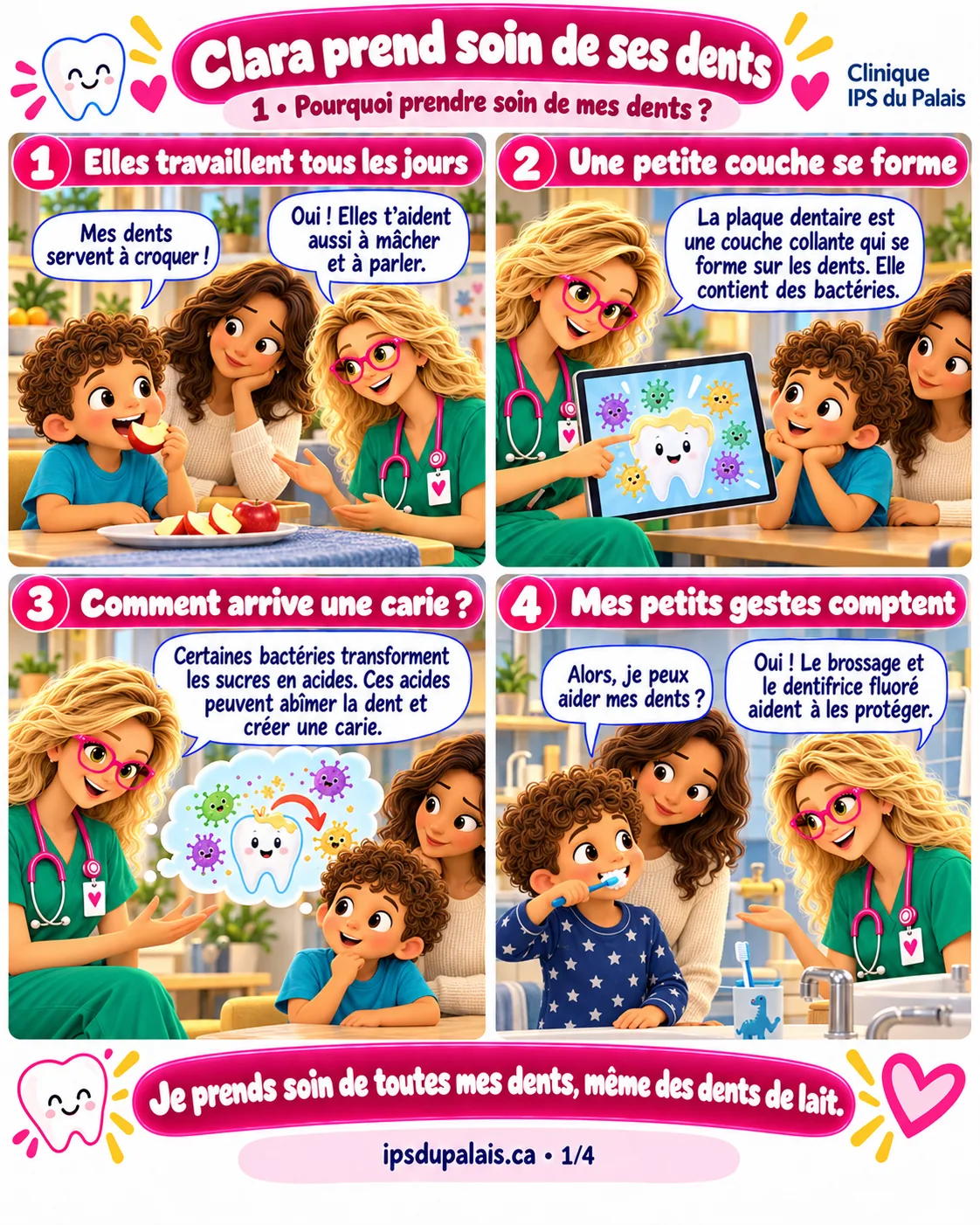
Page 1 — Why take care of my teeth?
1. They work every day
- The child: “My teeth are for crunching!”
- Clara: “Yes! They also help you chew and talk.”
2. A thin layer forms
- Clara: “Dental plaque is a sticky layer that forms on teeth. It contains bacteria.”
3. How does a cavity happen?
- Clara: “Some bacteria turn sugars into acids. These acids can damage the tooth and cause a cavity.”
4. My little actions count
- The child: “So I can help my teeth?”
- Clara: “Yes! Brushing and fluoride toothpaste help protect them.”
“I take care of all my teeth, even my baby teeth.”
Read together: what do your teeth do during your day?
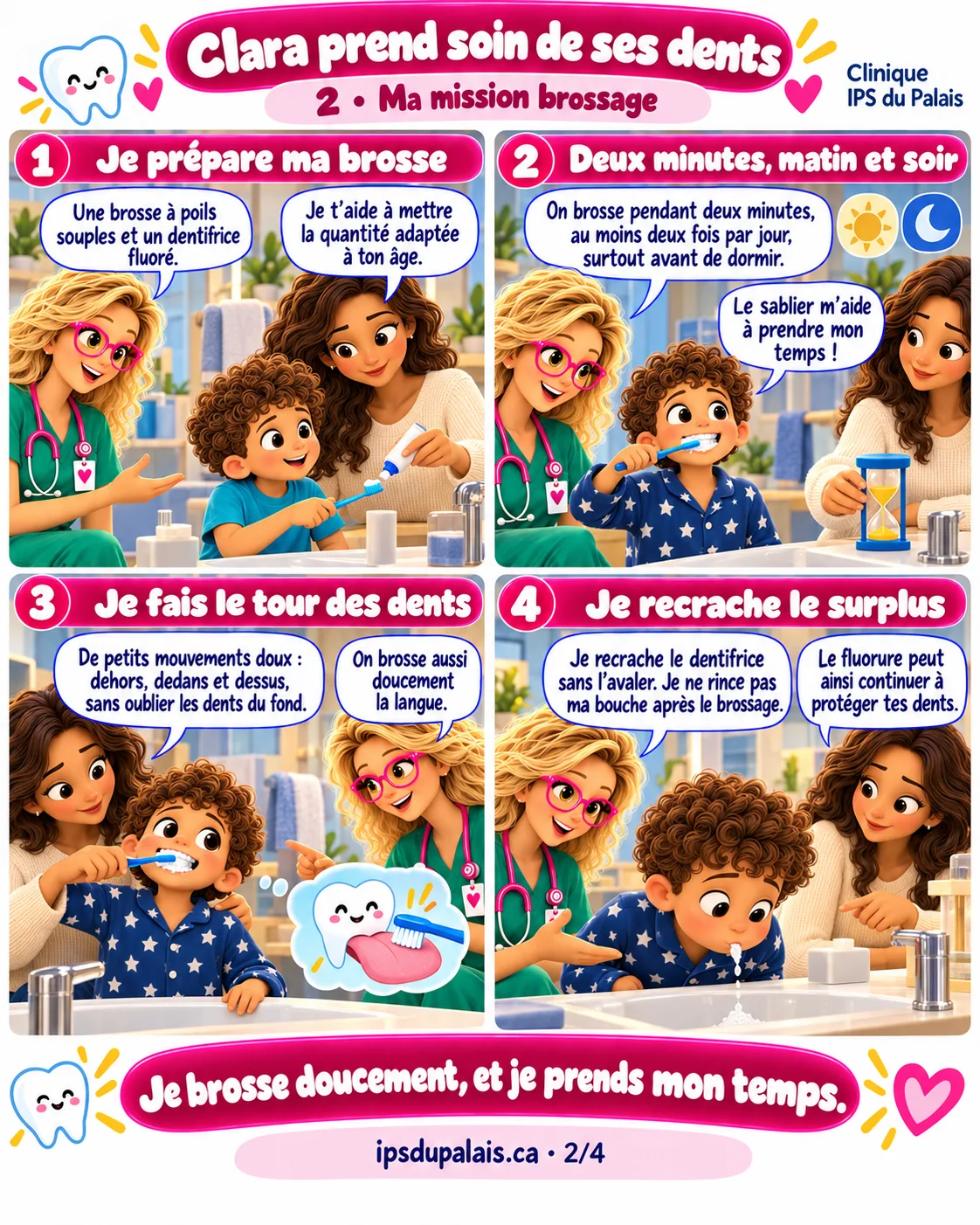
Page 2 — My brushing mission
1. I get my brush ready
- Clara: “A soft-bristled brush and fluoride toothpaste.”
- The mother: “I’ll help you use the right amount for your age.”
2. Two minutes, morning and night
- Clara: “We brush for two minutes, at least twice a day, especially before bed.”
- The child: “The sand timer helps me take my time!”
3. I go all around my teeth
- The mother: “Small, gentle movements: outside, inside and on top, without forgetting the back teeth.”
- Clara: “We also gently brush the tongue.”
4. I spit out the extra
- Speech bubble: “I spit out the toothpaste without swallowing it. I don’t rinse my mouth after brushing.”
- The mother: “That way, the fluoride can keep protecting your teeth.”
“I brush gently and take my time.”
Read together: what helps you brush for two minutes?
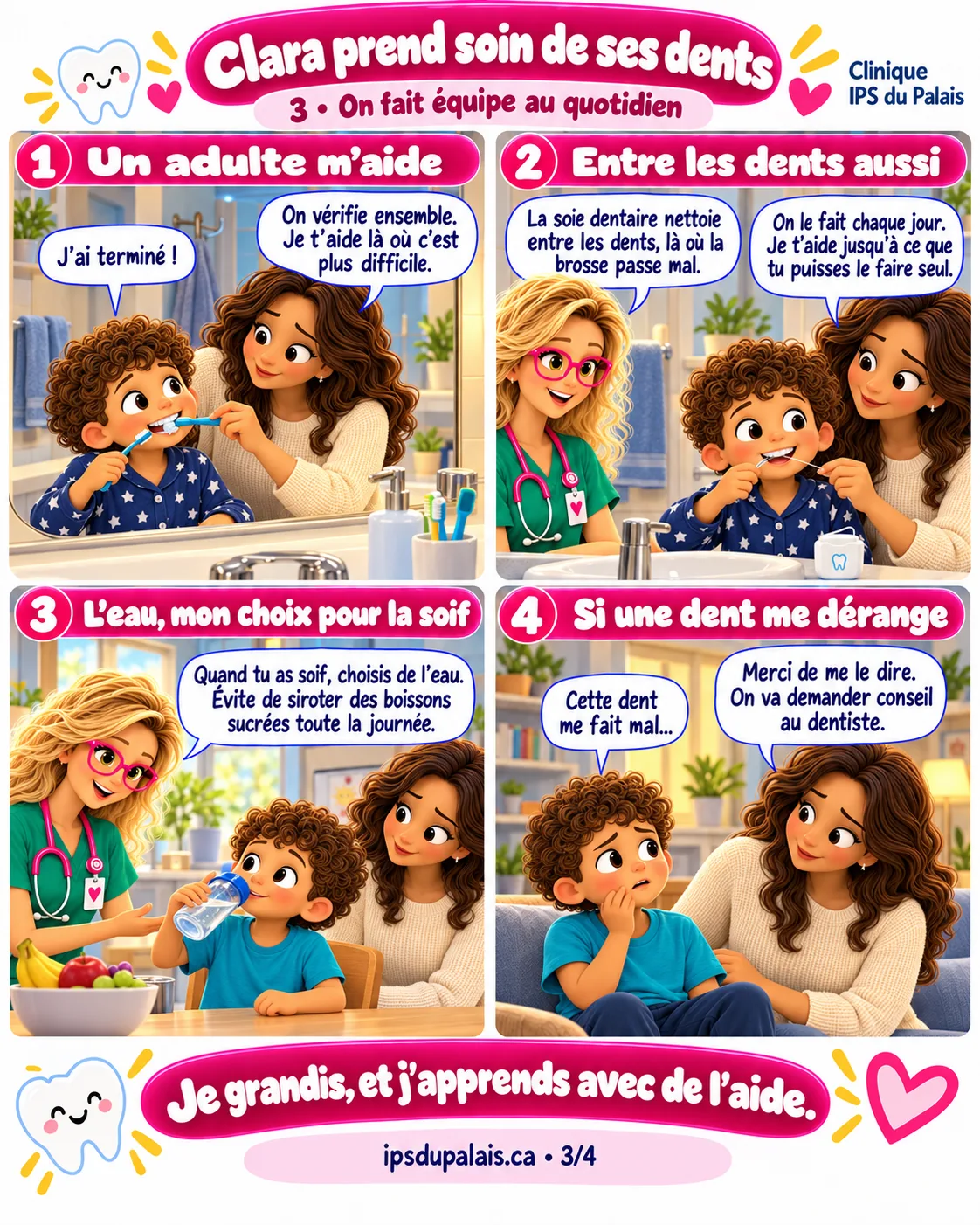
Page 3 — A team every day
1. An adult helps me
- The child: “I’m done!”
- The mother: “Let’s check together. I’ll help you where it’s harder.”
2. Between the teeth too
- Clara: “Floss cleans between the teeth, where the brush can’t reach well.”
- The mother: “We do it every day. I’ll help you until you can do it on your own.”
3. Water, my choice when I’m thirsty
- Clara: “When you’re thirsty, choose water. Avoid sipping sugary drinks all day long.”
4. If a tooth bothers me
- The child: “This tooth hurts…”
- The mother: “Thank you for telling me. We’ll ask the dentist for advice.”
“I’m growing up, and I learn with help.”
Read together: when would you like an adult to help you?
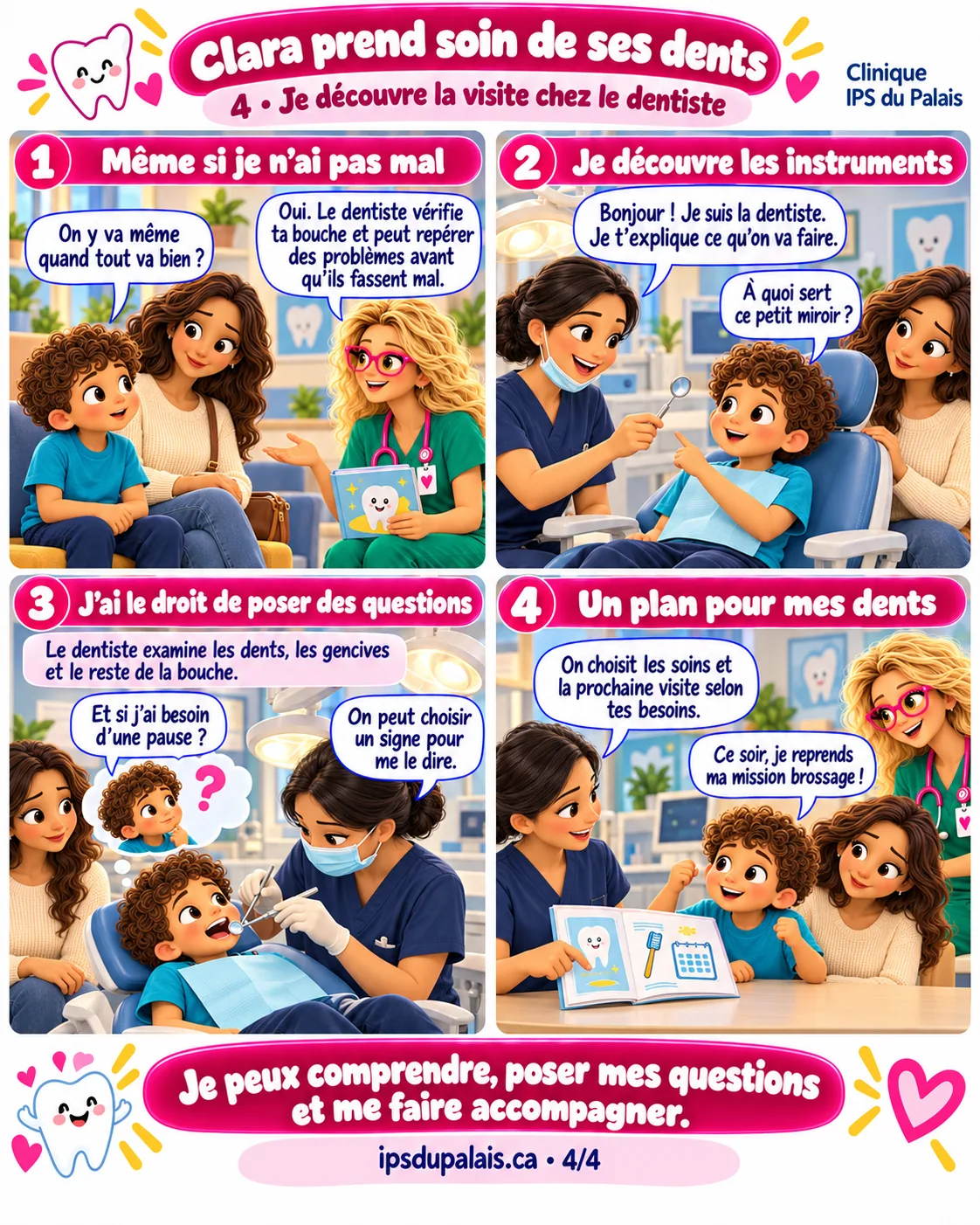
Page 4 — I discover the visit to the dentist
1. Even when nothing hurts
- The child: “We go even when everything is fine?”
- Clara: “Yes. The dentist checks your mouth and can find problems before they hurt.”
2. I discover the instruments
- The dentist: “Hello! I’m the dentist. I’ll explain what we’re going to do.”
- The child: “What is this little mirror for?”
3. I can ask questions
- Text box: “The dentist examines the teeth, the gums and the rest of the mouth.”
- The child: “What if I need a break?”
- The dentist: “We can choose a sign so you can tell me.”
4. A plan for my teeth
- The dentist: “We choose the care and the next visit based on your needs.”
- The child: “Tonight, I’m back on my brushing mission!”
“I can understand, ask my questions and get support.”
Read together: what question would you like to ask the dentist?
Note: educational comic; fictional characters; does not replace a consultation. For a dental check-up or a toothache, see a dentist.
For parents: good to know
- Dental plaque is a sticky film of bacteria. When it stays on the teeth, its bacteria turn the sugars in food into acids that attack the tooth and can form a cavity. A child can get cavities as soon as the first tooth appears.
- The Government of Canada recommends a small soft-bristled brush and, from ages 3 to 12, a pea-sized amount of fluoride toothpaste. Before age 3, ask the dentist whether your child needs fluoride toothpaste.
- Brush for 2 minutes, 2 times a day, especially before bed. Brush the tongue and gums too. Teach your child to spit out extra toothpaste without rinsing, so the fluoride keeps protecting the teeth.
- From ages 3 to 6, the adult brushes the child’s teeth and shows them how. According to the Government of Canada, children can brush on their own once they can write their name in cursive; they still need guidance after that. Floss every day, with an adult’s help until about age 9.
- Between meals, choose water. The more often and longer sugary foods and drinks stay in the mouth, the higher the risk of cavities.
- The first dental visit should happen before age 1 or within 6 months of the first tooth. The Ordre des dentistes du Québec then recommends a visit every 6 months, which the dentist may adjust after the exam: a cavity may not hurt at first.
- Baby teeth are used for chewing, speaking, smiling and guiding the permanent teeth.
Sources (in French): Government of Canada, Santé buccodentaire des enfants (modified June 11, 2026); Ordre des dentistes du Québec, L’ABC du brossage and L’examen dentaire (updated April 1, 2026); Government of Québec, À propos de la carie dentaire (updated August 28, 2023). Consulted on October 21, 2026.

Psst… a little secret from Clara
In the comics, Clara puts on her scrubs to tell the story of the care. In real life, Clara is the website's virtual assistant: the clinic's nurses and health professionals are the ones who provide care. Clara is here to guide you around the website!
Kids' corner
More stories with Clara

Clara's comics are intended to inform children and their parents. They do not replace a consultation or an assessment by a health professional. In an emergency, call 911. For health advice, call Info-Santé 811. Page published on October 21, 2026.